A list of notable Texas mammals, with photos and an identification guide to each species. Read on to discover interesting and iconic mammals of Texas.
Introduction
Texas is home to a wide variety of mammals across deserts, plains, forests, rivers, and brush country.
On this page, you’ll find a list of especially characteristic, iconic, or regionally notable Texas mammals, including familiar animals such as White-tailed Deer, Coyote, Bobcat, and Nine-banded Armadillo, along with lesser known mammals such as collared peccary, hispid cotton rat, and ringtail.
The list below is intended as an introduction to Texas mammal identification and natural history, with attention to the habitats and features that make these species distinctive. It is not a complete checklist of Texas mammals, but a useful overview of the Lone Star State’s mammalian inhabitants.
Texas Mammals List
American Beaver
- Scientific name: Castor canadensis
- Family: Castoridae
- Rank: species
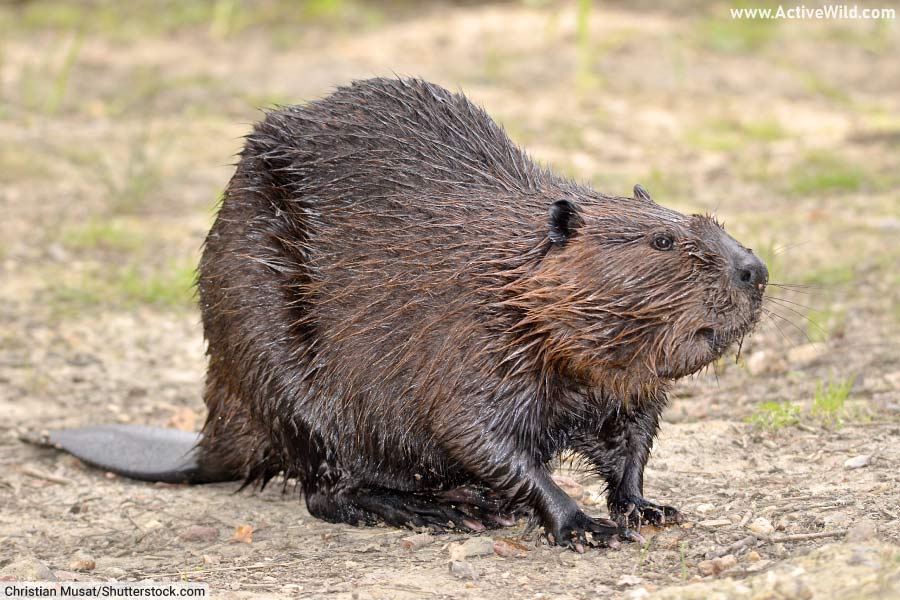
The broad, flat, paddle-shaped tail is the quickest way to identify an american beaver. This large aquatic rodent has dense brown to reddish-brown fur, a chunky body, small ears, and dark eyes set on a blunt head.
Adult beavers typically measure about 3 to 4 feet (0.9 to 1.2 m) in total length and often weigh 30 to 60 pounds (14 to 27 kg), though some are larger. The large orange front teeth are another strong clue, especially on animals feeding along shorelines.
In Texas, American beavers live along rivers, creeks, ponds, marshes, and lake edges, especially where trees such as willow and cottonwood grow near water. They are often noticed by lodges, bank dens, cut saplings, peeled sticks, and dams that back up shallow water.
Beavers are regionally notable because their dam-building can reshape small waterways and create wetland habitat used by many other species.
American Bison
- Scientific name: Bison bison
- Family: Bovidae
- Rank: species
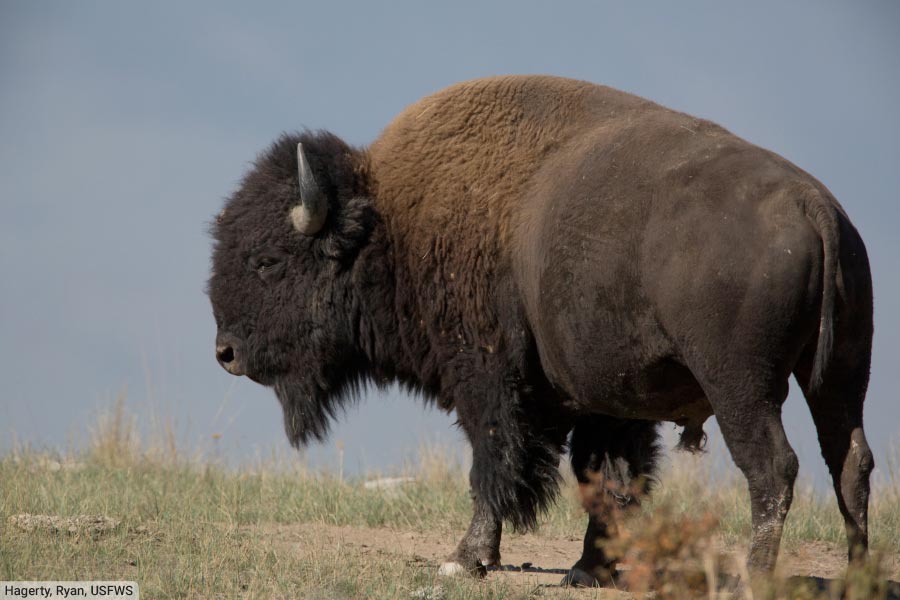
A massive, hump-shouldered grazer, the American bison is the largest native land mammal in North America. Adults stand about 5 to 6.5 feet (1.5 to 2 m) at the shoulder and commonly weigh roughly 700 to 2,000 pounds (320 to 900 kg). It has a heavy forequarters, a large head, short black horns that curve upward, and a shaggy dark brown coat on the head, neck, and front legs. The hindquarters are smaller and less shaggy, and the tail is relatively short with a tufted tip. Males are usually larger and more heavily built than females.
In Texas, American bison are most likely encountered in managed herds on grasslands, prairies, and large ranchlands, including conservation areas. A pronounced shoulder hump, thick beard, and the contrast between the bulky front end and slimmer rear are key identification clues.
In the past, vast herds of bison occupied much of Texas, particularly the Panhandle, Rolling Plains, and western prairies, and this distinctive mammal remains an important symbol of the state’s prairie wildlife history.
American Black Bear
- Scientific name: Ursus americanus
- Family: Ursidae
- Rank: species
In the United States, the American black bear is usually called simply the “black bear,” but its full name is often used to distinguish it from the similar-looking Asian black bear. It is the only bear species found in Texas.
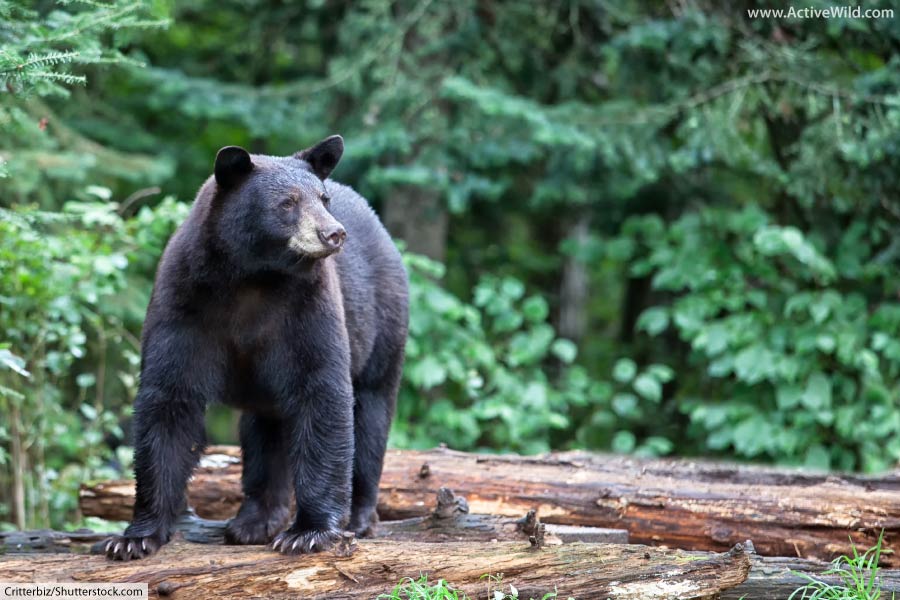
Black to cinnamon brown and strongly built, the black bear is a large mammal with a rounded silhouette, small rounded ears, a straight facial profile, and a short tail that is usually hidden by fur.
Adults are commonly about 4 to 6 feet (1.2 to 1.8 m) in total length and may weigh roughly 120 to 600 pounds (55 to 270 kg), with males usually much larger than females. The feet are broad, and tracks show five toes with curved claws.
In Texas, black bears are uncommon, and most likely found in the mountains, woodlands, and brushy canyons of West Texas, especially the Trans-Pecos. They also appear in dense forest habitats in East Texas near the Louisiana border.
Black bears are easily identified by their climbing ability, waddling walk, and lack of a shoulder hump, (which helps separate them from brown bears, in states in which both species are present).
Black-Tailed Jackrabbit
- Scientific name: Lepus californicus
- Family: Leporidae
- Rank: species
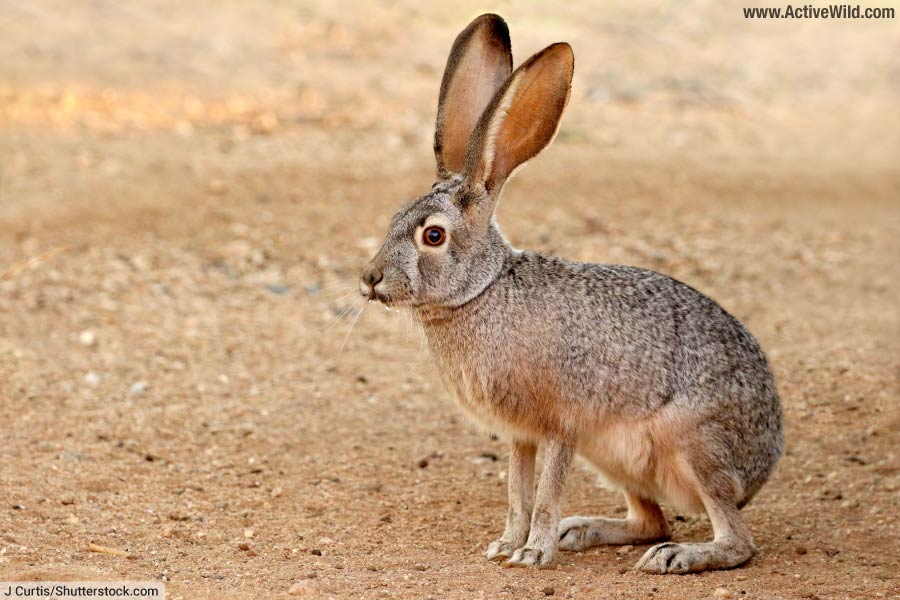
Long, black-tipped ears and a black upper tail are the quickest field marks of the black-tailed jackrabbit. Despite the name, this mammals is a hare, with very long legs, a lean body, and a powerful bounding gait.
Rabbits vs Hares
Rabbits are generally smaller animals that are born blind and helpless in burrows, while hares are larger, longer-legged animals whose young are born fully furred and able to see above ground.
Rabbits and hares both belong to the family Leporidae, but rabbits belong to several genera (such as Sylvilagus) while true hares (such as the black-tailed jackrabbit) belong to the genus Lepus.
Adult black-tailed jackrabbits are usually about 18 to 24 inches (46 to 61 cm) in body length and commonly weigh around 3 to 6 pounds (1.4 to 2.7 kg). The coat is gray-brown to buff with black peppering above and whitish below, helping it blend into dry grass and brush.
In Texas, these fast-moving mammals are most often seen in open country, including prairies, desert scrub, ranchland, roadsides, and brushy plains, especially in the western and southern parts of the state. They are often found by their habit of freezing in cover, then suddenly sprinting away in long leaps.
Bobcat
- Scientific name: Lynx rufus
- Family: Felidae
- Rank: species
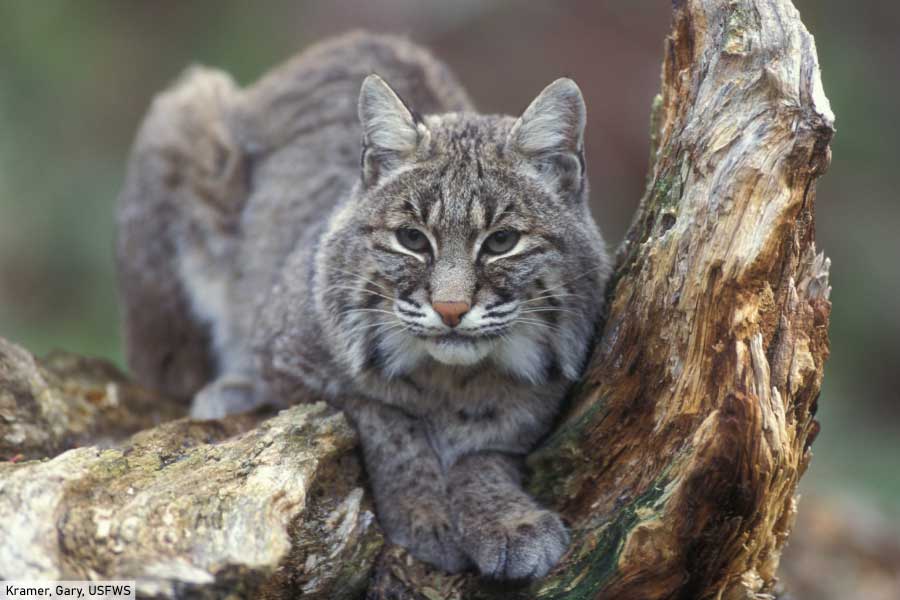
The bobcat is a medium-sized wild cat with a compact body, long legs, and a short “bobbed” tail. Adults are usually about 26 to 41 inches (66 to 104 cm) in total length and commonly weigh around 15 to 35 pounds (7 to 16 kg), with males often larger than females.
Bobcats are significantly larger and more heavily built than a typical domestic cat, often weighing two to four times as much.
The coat is gray-brown to tawny with dark spots or bars, a pale underside, and a short tail tipped black above and whitish below. Pointed ears with small black tufts, a broad face, and cheek ruffs are useful identification clues.
In Texas, bobcats occur statewide in brushland, woodland, desert edges, canyons, swamps, and suburban greenbelts. They are most often encountered as a brief crossing on roads, a glimpse in thorn scrub, or by tracks.
Collared Peccary
- Scientific name: Dicotyles tajacu
- Family: Tayassuidae
- Rank: species
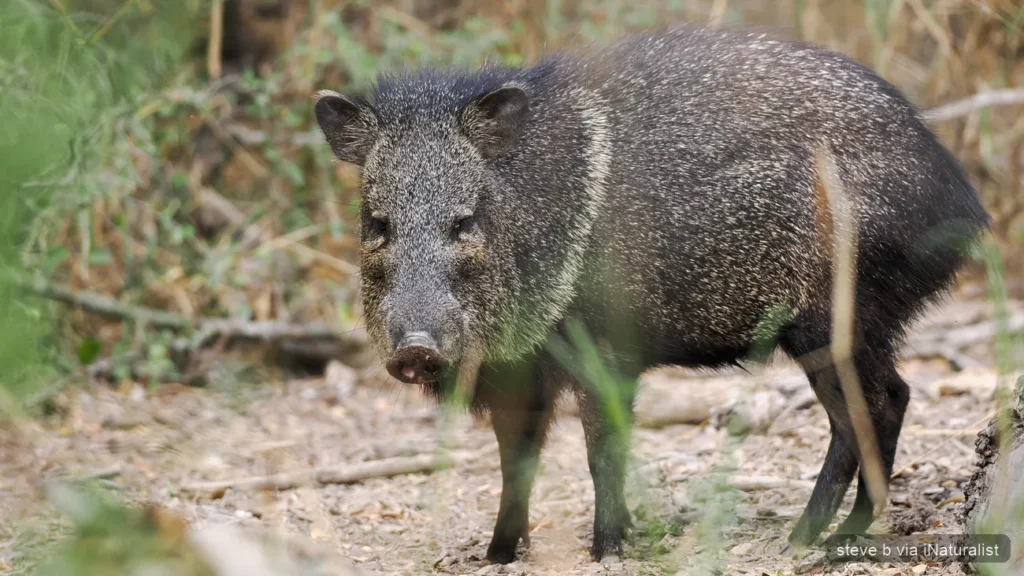
The collared peccary is a pig-like mammal with a compact body, short legs, a blunt snout, and little or no visible tail. Grizzled gray to blackish overall, the species has a pale buff to whitish band across the shoulders and chest forms the “collar” that gives it its name.
Adults are usually about 35 to 42 inches (89 to 107 cm) in total length, stand roughly 16 to 20 inches (41 to 51 cm) at the shoulder, and often weigh about 30 to 60 pounds (14 to 27 kg). The coarse coat, rounded ears, and herd-forming habit help separate it from feral hogs.
In Texas, collared peccaries are most common in South Texas brush country, dry woodland, cactus scrub, and rocky desert habitats of the Trans-Pecos. They are often encountered in small groups crossing roads, moving through thorn scrub, or feeding near prickly pear and other native plants. Texas holds some of the largest populations of this distinctive wild mammal.
Coyote
- Scientific name: Canis latrans
- Family: Canidae
- Rank: species
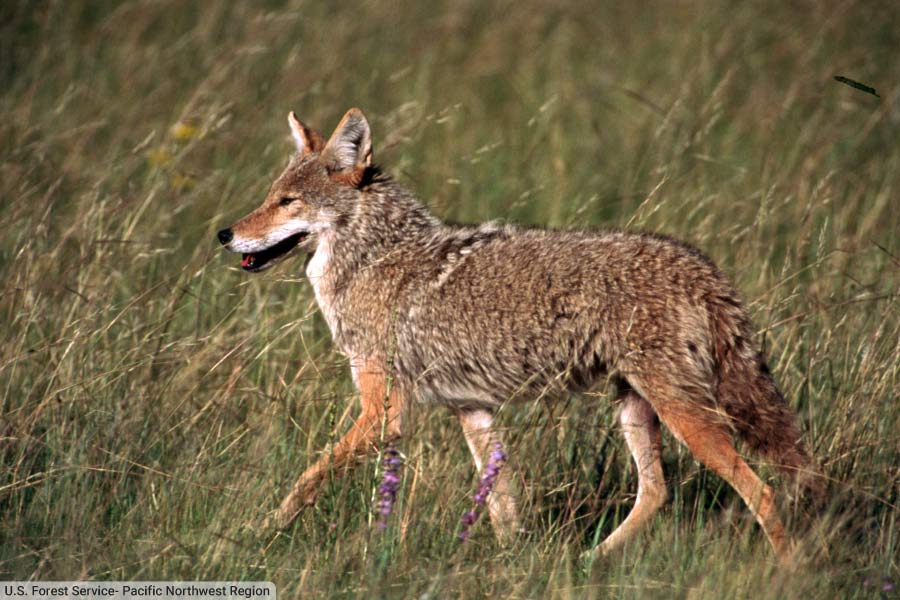
Across Texas, coyotes are found in grasslands, brush country, deserts, open woodlands, farmland, and many suburban edges. They are often seen trotting across roads, along fence lines, or through vacant lots and greenbelts, especially at dawn or dusk. Their statewide range and ability to live near people make them one of the most familiar wild mammals in Texas.
A coyote is a medium-sized, slender wild canid with long legs, a narrow muzzle, and large pointed ears. Adults are typically about 3.5 to 4.5 feet (107 to 137 cm) in total length, including the tail, and commonly weigh about 20 to 45 pounds (9 to 20 kg). The coat is usually grayish brown to buff with black-tipped guard hairs, paler underparts, and a bushy tail usually carried low with a dark tip. Identification clues include the lean build, sharp face, and tail held down while moving, unlike many domestic dogs.
Hispid Cotton Rat
- Scientific name: Sigmodon hispidus
- Family: Cricetidae
- Rank: species
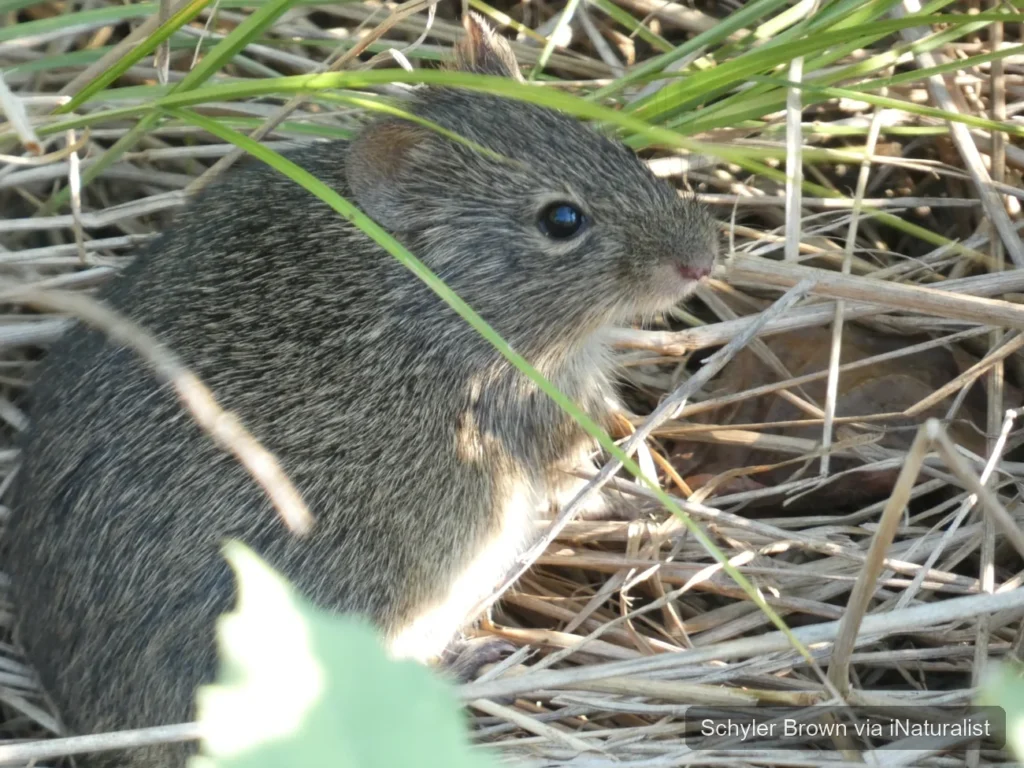
The hispid cotton rat is a chunky, short-eared rat with coarse, bristly fur and a relatively short, scaly tail. The coat is usually grizzled brown, gray-brown, or blackish above and paler below, and the stiff guard hairs give it a rough look that helps separate it from sleeker mice and rats. Adults are typically about 10 to 14 inches (25 to 36 cm) in total length, with the tail making up less than half of that, and often weigh around 3 to 8 ounces (85 to 225 g).
In Texas, hispid cotton rats are most often found in dense grassy cover, weedy fields, roadsides, brushy pastures, marsh edges, and overgrown ditches. They are usually detected as quick, heavy-bodied rodents moving through thick vegetation rather than in open areas.
Mexican Free-Tailed Bat
- Scientific name: Tadarida brasiliensis
- Family: Molossidae
- Rank: species
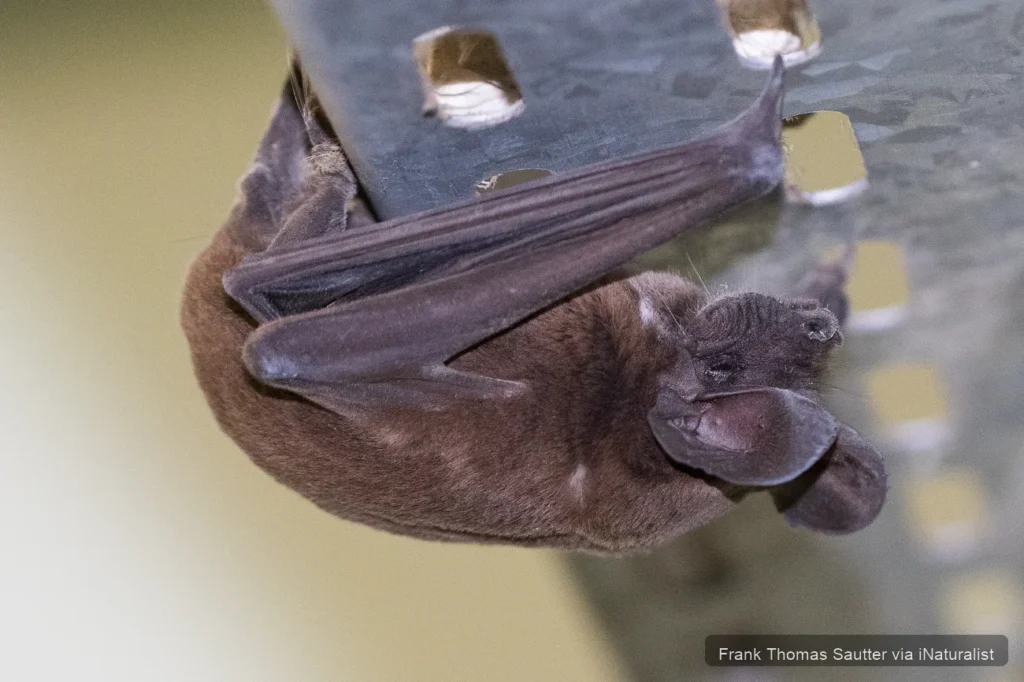
The mexican free-tailed bat is a medium-sized, narrow-winged bat with a long, tapered shape built for fast flight. Adults are about 3.5 to 5 inches (9 to 13 cm) long, with a wingspan of roughly 11 to 13 inches (28 to 33 cm), and usually weigh about 0.4 to 0.5 ounce (11 to 14 g). It is gray-brown to dark brown, with large ears, wrinkled lips, and a tail that extends well beyond the edge of the tail membrane, a key identification clue.
Mexican free-tailed bats are often encountered around caves, bridges, highway overpasses, tunnels, and buildings, especially where large colonies gather. They are most often noticed at dusk as streams of bats emerge to feed on flying insects.
Texas supports some of the largest bat colonies in the world, including the famous Bracken Cave colony near San Antonio, where around 20 million Mexican free-tailed bats make their home during the warmer months.
Mountain Lion
- Scientific name: Puma concolor
- Family: Felidae
- Rank: species
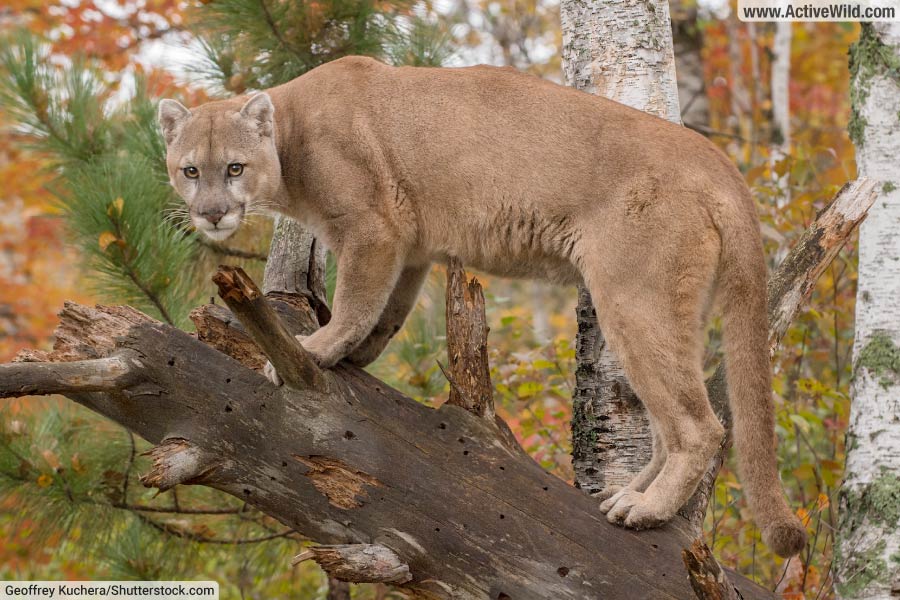
The mountain lion is a large, long-bodied wild cat with a plain tawny to gray-brown coat, pale underparts, and a very long, thick tail tipped in black. The head looks relatively small compared with the body, and the ears are short and rounded with dark backs.
Adults are typically about 5 to 8 feet (1.5 to 2.4 m) in total length, including the tail, and often weigh around 64 to 220 pounds (29 to 100 kg), with males larger than females.
In Texas, mountain lions are most likely to be encountered in rugged brush country, canyonlands, desert mountains, and rocky foothills, especially in the Trans-Pecos and parts of South Texas.
Tracks, scat, and glimpses at dawn or dusk are more common than clear sightings. Key identification clues include the unspotted coat of adults, the black-tipped tail, and a catlike silhouette much larger and longer-tailed than a bobcat.
Mule Deer
- Scientific name: Odocoileus hemionus
- Family: Cervidae
- Rank: species
In Texas, mule deer are most often found in open brushlands, desert foothills, canyon country, and pinyon-juniper or oak scrub, especially in the Trans-Pecos and the drier, western parts of the state. They are a large deer, standing about 3 to 3.5 feet (0.9 to 1.1 m) at the shoulder and commonly weighing around 100 to 300 pounds (45 to 136 kg), with bucks larger than does.
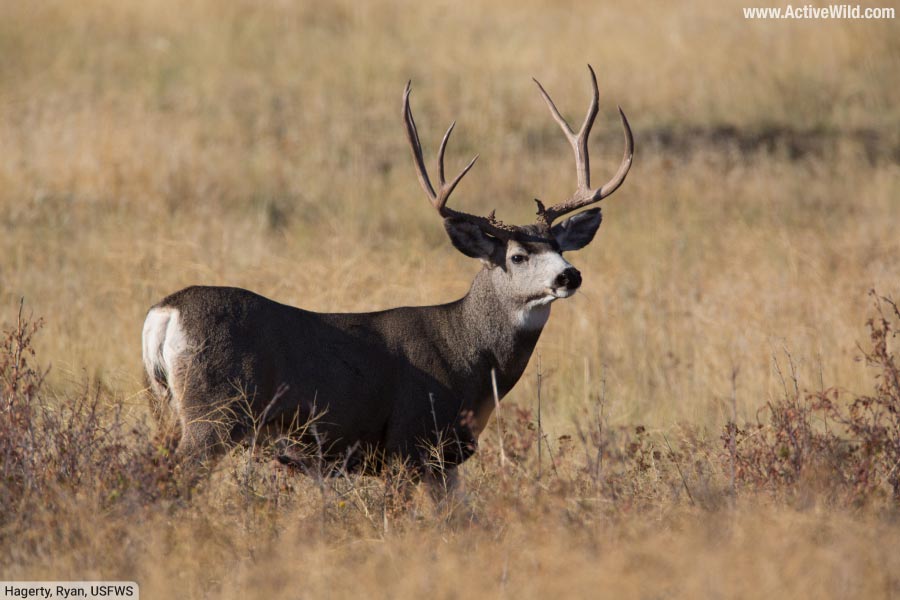
The mule deer is usually gray-brown to reddish brown, with a white rump and a small white tail tipped in black. Its most useful identification clues are the very large ears, which are longer than those of a white-tailed deer, and the tail pattern.
When alarmed, the mule deer often bounds away in stiff-legged leaps. Bucks grow antlers that fork repeatedly rather than rising from a single main beam.
Nine-Banded Armadillo
- Scientific name: Dasypus novemcinctus
- Family: Dasypodidae
- Rank: species
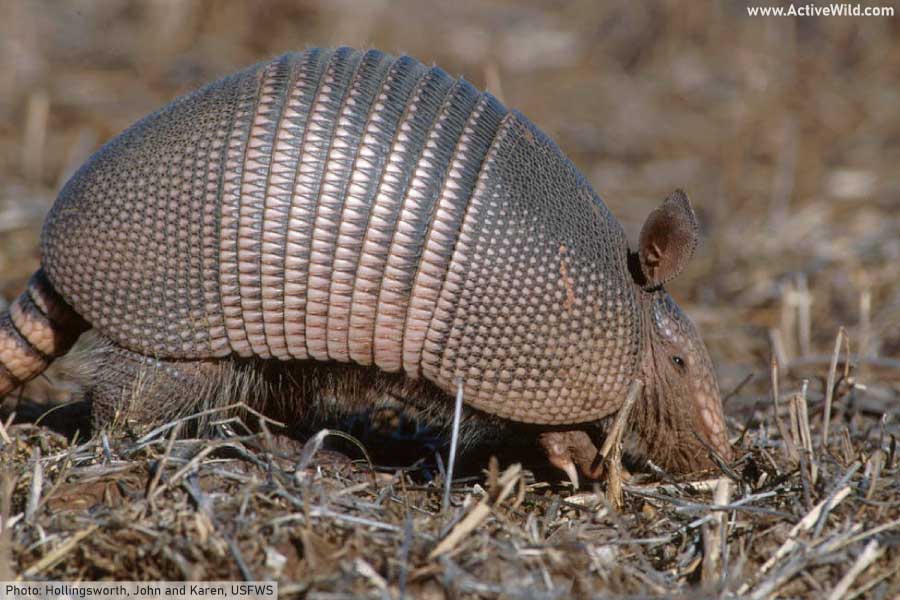
The nine-banded armadillo is easily recognized by its armored shell and the row of movable bands across the middle of the back, usually appearing as eight or nine distinct bands.
This small to medium-sized mammal has a long, pointed snout, large ears, short legs, and a long, ringed tail. Adults are typically about 2 to 2.5 feet (61 to 76 cm) in total length, including the tail, and often weigh around 8 to 17 pounds (3.6 to 7.7 kg). The body is gray to brownish, with sparse hair on the underside.
Nine-banded armadillos are commonly encountered in woodlands, brushy areas, grasslands, and along roadsides, especially where soils are loose enough for digging. They are often detected by their burrows, rooting signs, or their habit of shuffling along low to the ground. The species’ banded shell is usually enough to separate it from any other wild mammal in Texas.
North American River Otter
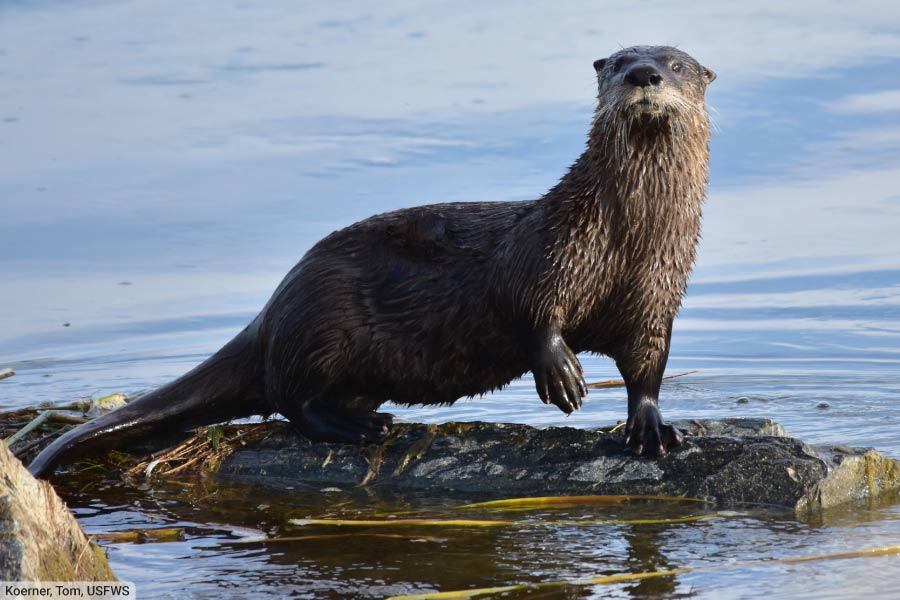
- Scientific name: Lontra canadensis
- Family: Mustelidae
- Rank: species
The north American river otter is a long, sleek, semi-aquatic mammal with a thick tapering tail, short legs, and a small broad head. Adults are typically about 3 to 4 feet (0.9 to 1.2 m) in total length and often weigh around 10 to 30 pounds (4.5 to 14 kg), with males usually larger than females. Its fur is rich brown above and paler gray-brown below, and the feet are webbed.
In Texas, river otters are most likely to be found along wooded rivers, coastal marshes, bayous, lakes, and quiet streams, especially where banks provide cover.
Useful identification clues include the long muscular tail, sinuous swimming posture, and habit of surfacing briefly before diving again. Tracks often show five toes. This species is much less commonly seen than many Texas mammals, and is an indicator of healthy wetland and river systems.
Pallid Bat
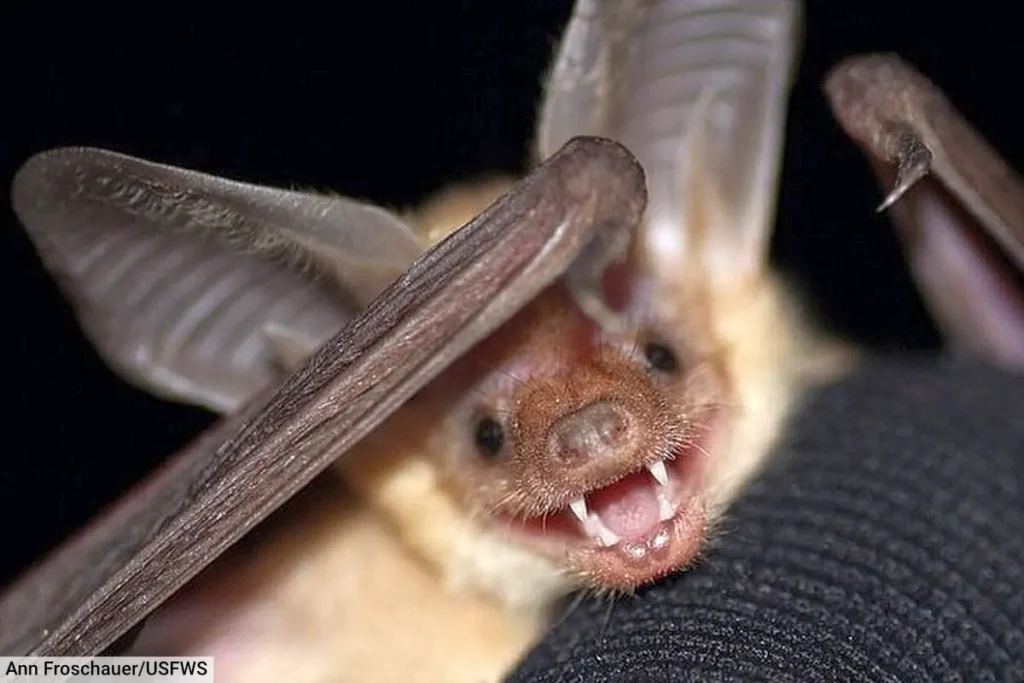
- Scientific name: Antrozous pallidus
- Family: Vespertilionidae
- Rank: species
In Texas, pallid bats are most often found in dry rocky country, canyons, cliffs, desert scrub, and open grasslands, and they may also roost in caves, rock crevices, mines, bridges, and buildings. They are most likely to be encountered at night in western and central parts of the state, especially around rugged, arid terrain.
This is a fairly large bat with a wingspan of about 14 to 16 inches (36 to 41 cm) and a body length of about 3.5 to 5 inches (9 to 13 cm). It is pale overall, usually light tan, cream, or yellowish brown, with very large ears, a pig-like nose, and dark eyes. The wings are broad, and the face is noticeably paler than in many other Texas bats.
A key identification clue of the pallid bat is its oversized ears and washed-out color.
Pronghorn
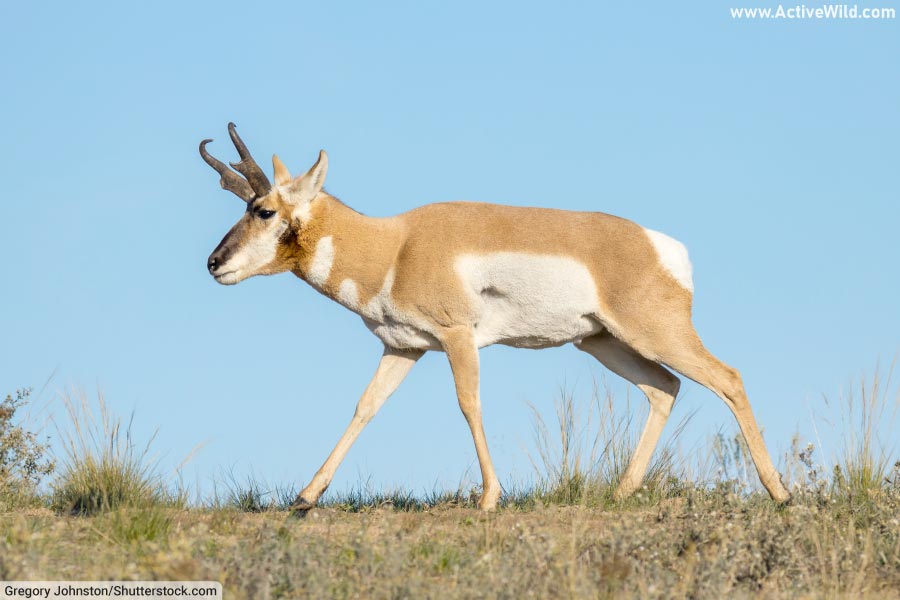
- Scientific name: Antilocapra americana
- Family: Antilocapridae
- Rank: species
The pronghorn is best identified by its tan body, bright white rump and belly, and bold black markings on the face. It is a slender, long-legged mammal built for speed, with a short tail, large eyes, and a deer-like shape.
Adult pronghorns stand about 3 to 3.5 feet (0.9 to 1.1 m) at the shoulder and usually weigh about 75 to 150 pounds (34 to 68 kg). Both sexes have horns, but the male’s are usually longer and more strongly hooked.
Despite being commonly known as the “pronghorn antelope”, the pronghorn is not a close relative of the true antelopes found in Africa and parts of Asia and Europe.
In Texas, pronghorns are found mainly in open country of the Panhandle and Trans-Pecos, especially shortgrass prairie, desert grassland, and broad shrublands. They are most likely to be seen in wide treeless landscapes, often at a distance. A raised white rump patch is a useful field mark.
Raccoon
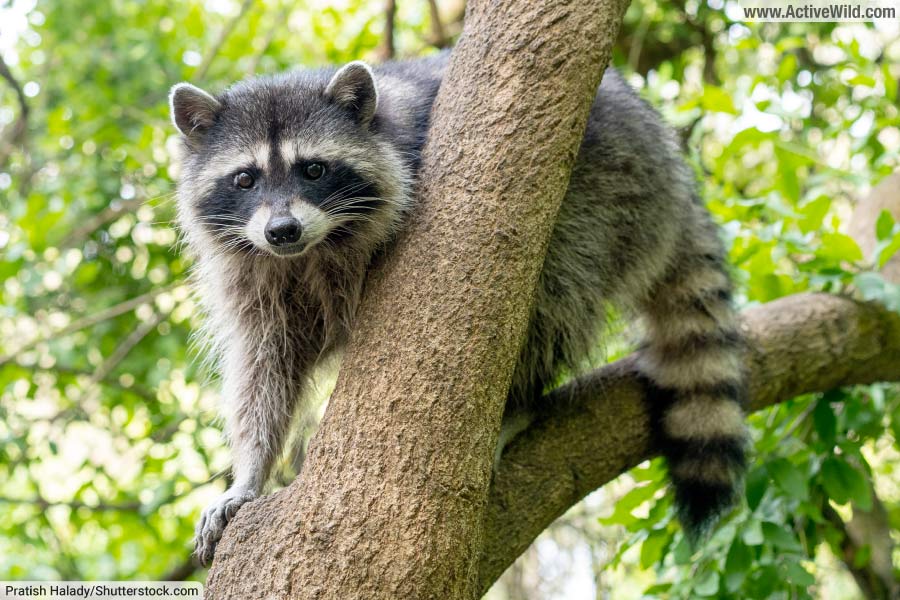
- Scientific name: Procyon lotor
- Family: Procyonidae
- Rank: species
Gray to grizzled brown with a black “mask” across the eyes and a bushy tail marked by several dark rings, the northern raccoon is one of the easiest Texas mammals to identify. It has a compact body, short legs, small rounded ears, and a pointed muzzle. Adults are typically about 2 to 3 feet (61 to 91 cm) in total length, including the tail, and often weigh about 8 to 20 pounds (3.6 to 9.1 kg), though some are heavier. The front feet are hand-like and unusually dexterous.
In Texas, raccoons live in bottomland woods, forests, brushy areas, wetlands, suburbs, and towns. They are often encountered near creeks, ponds, dumpsters, pet food, or roadways, mostly at night. Tracks with five long fingers and the ringed tail are useful clues.
Raccoons are widespread across the state and the species is among the mammals Texans are most likely to see around homes and campsites.
Ringtail
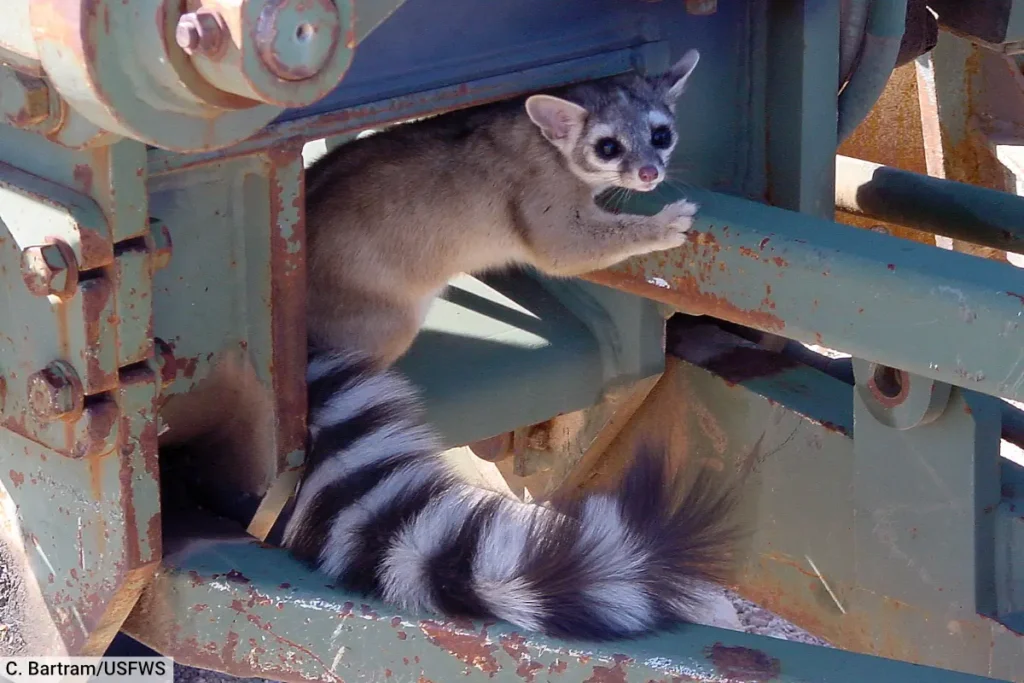
- Scientific name: Bassariscus astutus
- Family: Procyonidae
- Rank: species
The ringtail is a small, slender mammal with a catlike body, a long bushy tail, and short legs. This mainly nocturnal species has several other names, including ring-tailed cat, ringtail cat, civet cat, miner’s cat, and cacomistle, although it is neither a true cat nor a civet but a member of the raccoon family, Procyonidae.
Adult ringtails are about 24 to 32 inches (61 to 81 cm) in total length, with the tail making up roughly half that length, and they usually weigh about 1.5 to 3 pounds (0.7 to 1.4 kg). The fur is gray to buff-brown, the underparts are paler, and the tail has bold black-and-white rings. It has large dark eyes, large rounded ears, and a pointed face.
In Texas, ringtails are most often found in rocky canyons, cliffs, desert scrub, brushy slopes, and wooded stream corridors, especially in the western and central parts of the state. They are mainly nocturnal and may also turn up around barns, sheds, or old buildings near rough country.
The banded tail, big eyes, and agile climbing habit are the best identification clues. The ringtail is the Texas state small mammal.
Texas Kangaroo Rat
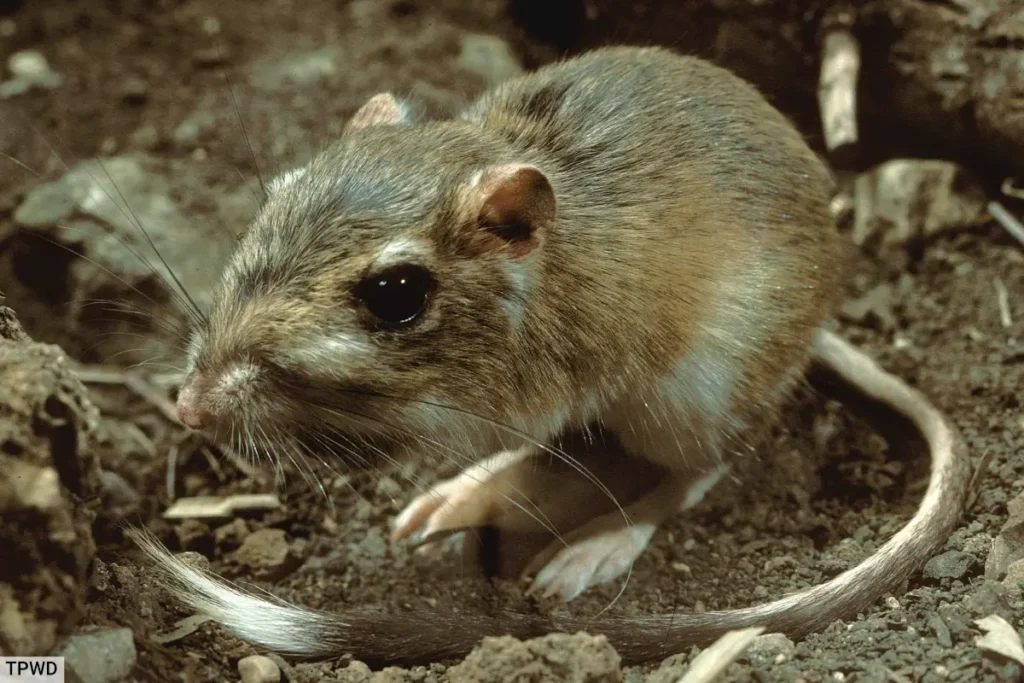
- Scientific name: Dipodomys elator
- Family: Heteromyidae
- Rank: species
The Texas kangaroo rat is a small, big-headed rodent with very long hind legs, tiny forelegs, and a long tail tipped with a noticeable tuft. Adults are about 10 to 14 inches (25 to 36 cm) in total length, including the tail. The upperparts are buffy brown to grayish brown, the underparts are white, and the large dark eyes and rounded ears stand out.
A key identification clue is the tail pattern: it is bicolored and usually ends in a distinct tuft, and the animal moves in quick hops rather than runs.
The Texas kangaroo rat lives in dry open country with sparse grasses, bare ground, and firm sandy or clay soils, especially in north-central parts of the state. It is most likely to be encountered at night near burrows in rangeland, pastures, or weedy field edges. It has a very limited range and is one of Texas’s more localized native mammals.
Townsend’s Big-Eared Bat
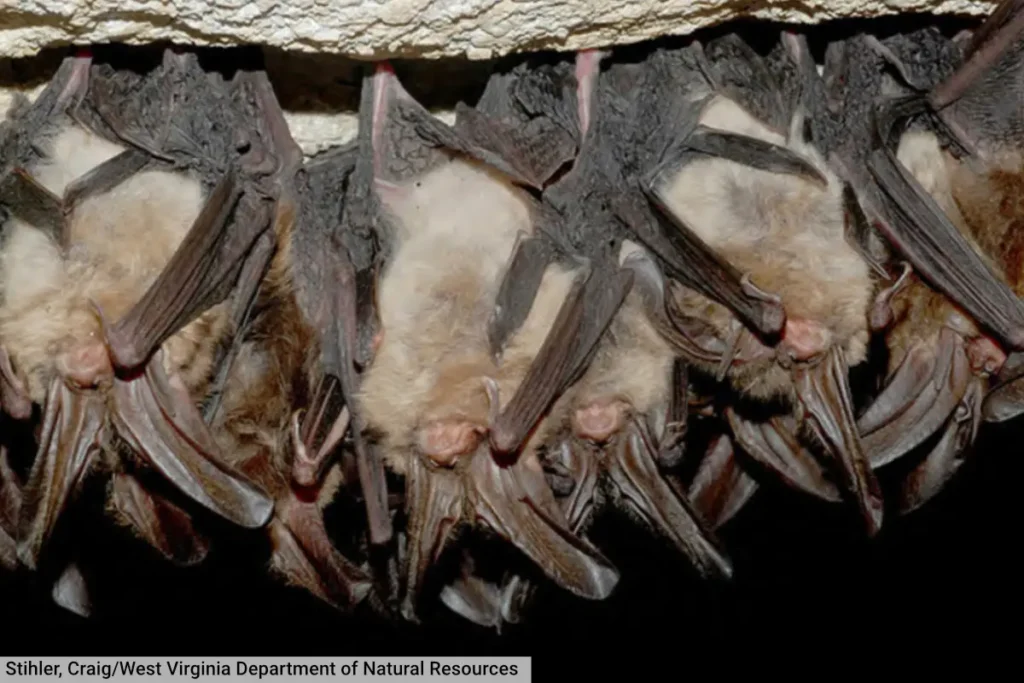
- Scientific name: Corynorhinus townsendii
- Family: Vespertilionidae
- Rank: species
Townsend’s big-eared bat is a medium-sized bat with an unmistakable silhouette. Its enormous ears, about 1.5 inches (4 cm) long, rise well above the head and often curl back like ram’s horns when at rest. The face has prominent paired lumps on the snout, and the body is small, about 3.5 to 4.5 inches (9 to 11 cm) long, with a wingspan of roughly 10 to 12 inches (25 to 30 cm). The pale brown to gray-brown fur is soft and fairly plain, and usually paler underneath.
In Texas, this bat is most likely to be found in caves, abandoned mines, old buildings, and other sheltered roost sites, especially in drier western parts of the state. It forages at night over shrublands, woodlands, canyons, and near water.
The species’ very large ears make it one of the easiest Texas bats to identify.
White-Tailed Deer
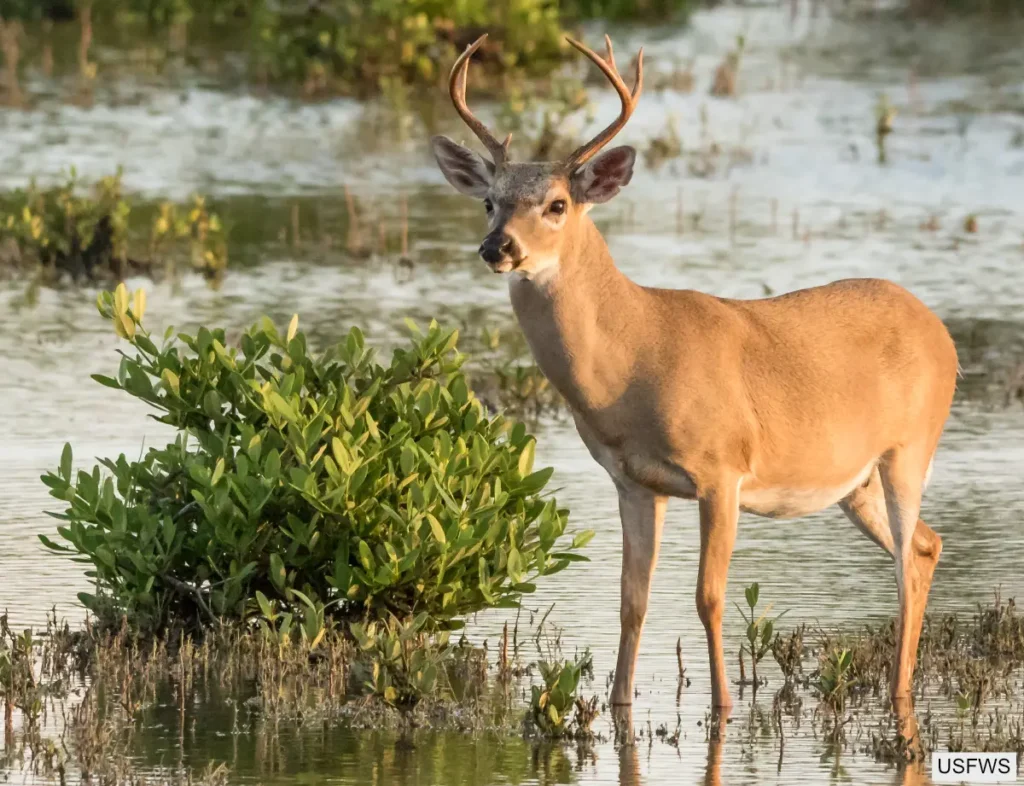
- Scientific name: Odocoileus virginianus
- Family: Cervidae
- Rank: species
In Texas, white-tailed deer are most often seen along woodland edges, brush country, river bottoms, suburbs, and agricultural areas, especially near dawn and dusk. They are widespread across the state and are among the most familiar large wild mammals in Texas.
Adult white-tailed deer stand about 32 to 40 inches (81 to 102 cm) at the shoulder. Bucks commonly weigh about 150 to 300 pounds (68 to 136 kg), while does are usually smaller. The coat is reddish-brown in summer and turns grayer in winter, with a white throat, belly, and the distinctive white underside of the tail.
When alarmed, the deer raises this tail like a bright flag, a key identification clue. Bucks grow antlers, which are shed and regrown yearly.
Further Reading
You can find out more about Texas wildlife on the following pages:
- Texas Snakes – List with Pictures & ID Guide
- Texas Lizards – List with Pictures & ID Guide
- Texas Frogs and Toads – Discover Amphibians found in Texas
You can find out more about mammals on these pages:
- You can find out more about mammals on this page: Mammals – The Ultimate Guide
- Discover different types of mammals on this page: Types of Mammals
The post Texas Mammals: Photos and Identification Guide to Iconic Species appeared first on Active Wild.