
Discover the different types of seal with this complete list of seal species, with pictures and facts.
Seal Species Index
Seal Families: The Three Main Types Of Seals
Seals are semi-aquatic marine mammals classified into three families: Phocidae (true seals), Otariidae (eared seals – this group includes fur seals and sea lions), and Odobenidae (walrus).
On this page you’ll find pictures and facts on every living true seal species.
Pinnipeds
Together, the species in the three families listed above make up the mammal group Pinnipedia, members of which are known as pinnipeds. Therefore, all seals, fur seals, sea lions and the walrus (which is the only member of its family) are pinnipeds.
True Seals
Like all pinnipeds, true seals are adapted for life in water, with streamlined bodies, flippers, and a thick layer of blubber for insulation. Their large eyes and sensitive whiskers aid in hunting prey in dark, cold waters.
True seals lack external ear flaps, while eared seals (sea lions and fur seals) have visible external ears.
True seals are also less agile on land compared to their eared counterparts. This is because, unlike eared seals, true seals are unable to swivel their hind flippers around and walk on them. Once in the water, however, true seals are excellent swimmers and divers.
True seals are mainly found in cold and temperate coastal waters in both the Northern and Southern Hemispheres, with many species inhabiting the Arctic and Antarctic regions, and a few adapted to isolated or warmer areas such as the Mediterranean, Caspian Sea, Lake Baikal, and the tropical waters of Hawaii.
The diet of most seals consists of fish, squid, and crustaceans, although some species, such as the leopard seal, feed on other marine mammals.
Seals are known for their social behavior, often gathering in large colonies during breeding season.
Baikal Seal
- Scientific Name: Pusa sibirica
- Where Found: Lake Baikal, Siberia, Russia
- Typical Size: 1.2–1.4 m / 3.9–4.6 ft
- Typical Weight: 50–130 kg / 110–285 lb
- Distinguishing Features: Smallest true seal; only freshwater seal species; dark gray back with lighter underside
- IUCN Conservation Status: Least Concern
The Baikal seal, or nerpa, is unique as the only seal species found exclusively in freshwater. Endemic to Russia’s Lake Baikal, it thrives in the lake’s icy waters. Small and plump, it has a uniformly gray coat. Baikal seals feed on fish, particularly golomyanka (Baikal oilfish). They are solitary and elusive, often hauling out on ice.
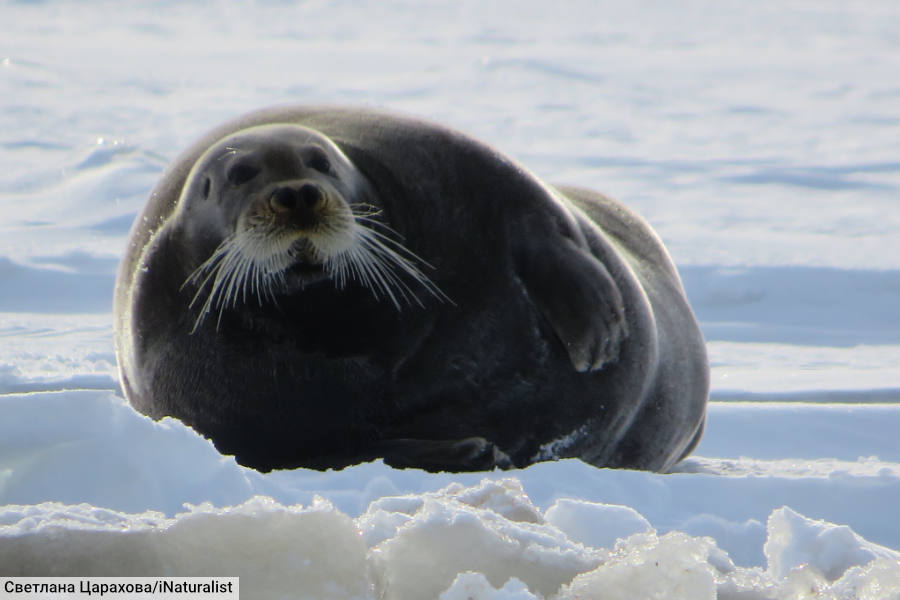
Bearded Seal
- Scientific Name: Erignathus barbatus
- Where Found: Arctic Ocean and adjacent seas
- Typical Size: 2.1–2.7 m / 6.9–8.9 ft
- Typical Weight: 200–430 kg / 440–950 lb
- Distinguishing Features: Long whiskers
- Scientific Name: ‘beard’; square-shaped flippers; rust-colored face
- IUCN Conservation Status: Least Concern
Recognized by their long white whiskers, bearded seals inhabit Arctic coastal areas and sea ice. These seals prefer shallow waters where they dive to forage on benthic prey like clams and shrimp. Their square front flippers and short snouts are distinctive. Bearded seals are solitary and vocal, with males producing underwater songs during mating season. Pups are precocial and born on drifting ice. The rust-colored stains around their mouths come from foraging in sediment.
Caspian Seal

- Scientific Name: Pusa caspica
- Where Found: Caspian Sea
- Typical Size: 1.4–1.8 m / 4.6–5.9 ft
- Typical Weight: 50–86 kg / 110–190 lb
- Distinguishing Features: One of the smallest pinnipeds; grayish coat; only marine mammal in Caspian Sea
- IUCN Conservation Status: Endangered
Endemic to the Caspian Sea, the Caspian seal is one of the smallest true seals. They have a short, stocky build and a silvery-gray coat. This species is highly adapted to a closed sea environment and breeds on winter ice sheets. Their diet includes a variety of fish and crustaceans. Caspian seals face threats from pollution, habitat loss, and disease outbreaks, and are listed as endangered due to a declining population and low pup survival rates.
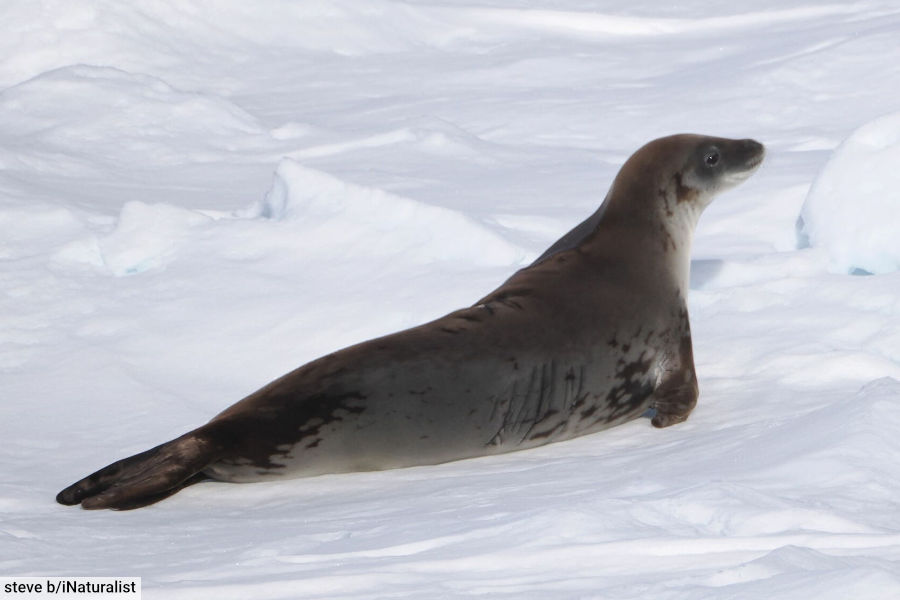
Crabeater Seal
- Scientific Name: Lobodon carcinophaga
- Where Found: Circum-Antarctic pack ice
- Typical Size: 2.2–2.6 m / 7.2–8.5 ft
- Typical Weight: 200–300 kg / 440–660 lb
- Distinguishing Features: Sieve-like teeth for filtering krill; light-colored coat with scars
- IUCN Conservation Status: Least Concern
Despite the name, crabeater seals feed almost exclusively on Antarctic krill, using specialized teeth that filter them from seawater. Found on Antarctic pack ice, they are the most abundant seal species. They have slender, pale-colored bodies often marked with scars from leopard seal attacks. Crabeater seals are excellent swimmers and can dive to moderate depths. They are seasonally migratory and tend to haul out on ice in small, loose groups.
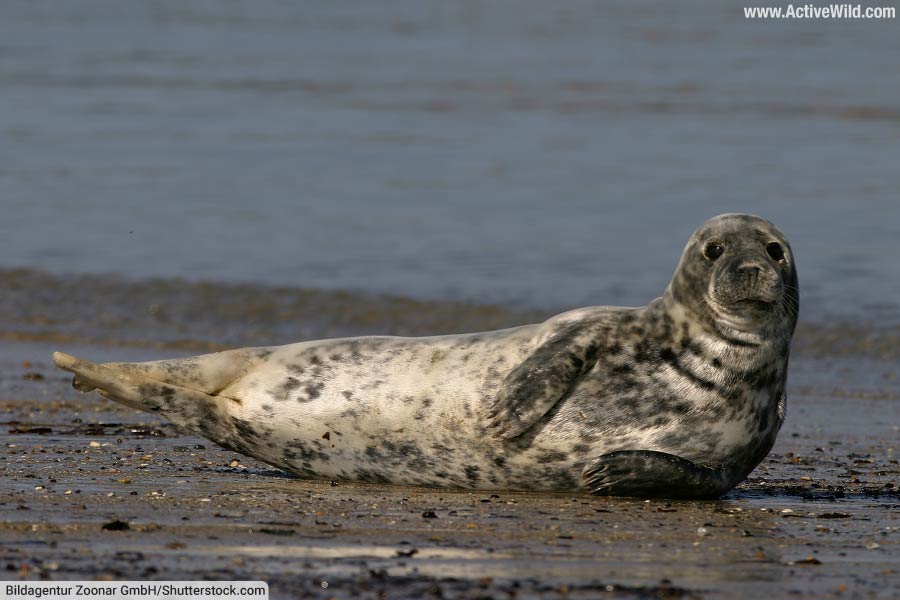
Gray Seal
- Scientific Name: Halichoerus grypus
- Where Found: North Atlantic Ocean
- Typical Size: 1.65–2.5 m / 5.4–8.2 ft
- Typical Weight: 103–310 kg / 227–683 lb
- Distinguishing Features: Long nose; spotted gray or brown coat; sexual dimorphism
- IUCN Conservation Status: Least Concern
Gray seals are known for their horse-like elongated snouts and sexually dimorphic size (males are substantially larger than females). They inhabit the North Atlantic Ocean and breed in large colonies on remote islands and coasts. Their coat color varies from gray to brown, often mottled with spots. Gray seals feed on fish and occasionally cephalopods. Males are territorial during the breeding season, often engaging in fierce fights. The gray seal communicates not only with vocalizations, but also by clapping its flippers.
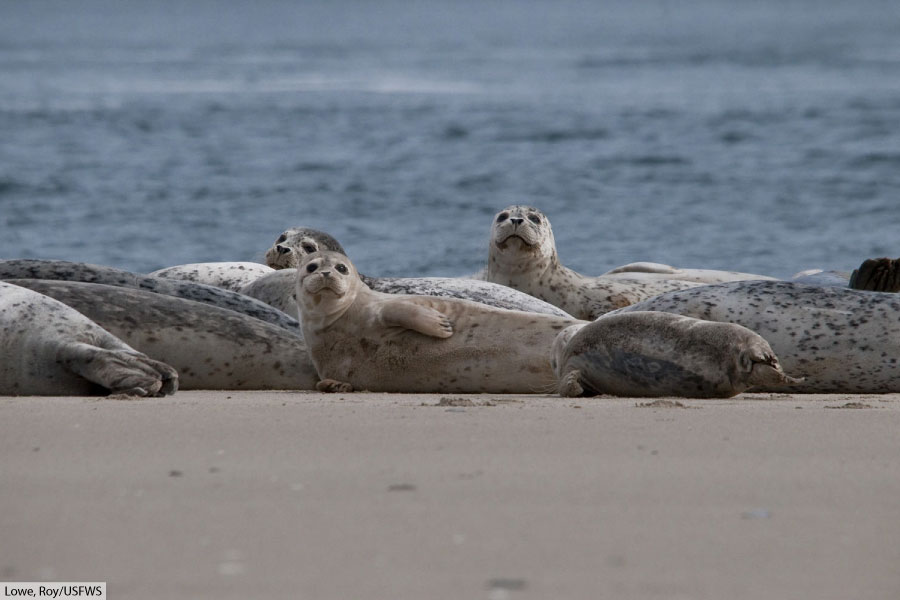
Harbor Seal
- Scientific Name: Phoca vitulina
- Where Found: Northern Hemisphere coasts
- Typical Size: 1.2–1.9 m / 3.9–6.2 ft
- Typical Weight: 50–170 kg / 110–375 lb
- Distinguishing Features: Rounded head; no ear flaps; variable spotted coat
- IUCN Conservation Status: Least Concern
Harbor seals are the most widespread pinniped species, found along temperate and Arctic coastlines of the Northern Hemisphere. They have a rounded head, V-shaped nostrils, and a spotted coat ranging from light gray to dark brown. These seals are opportunistic feeders, consuming fish, crustaceans, and mollusks. They haul out on beaches, rocks, and ice to rest and molt. Harbor seals are generally solitary, but will gather in groups at haul-out sites.
You can find out more about this species on this page: Harbor Seal Facts
Harp Seal
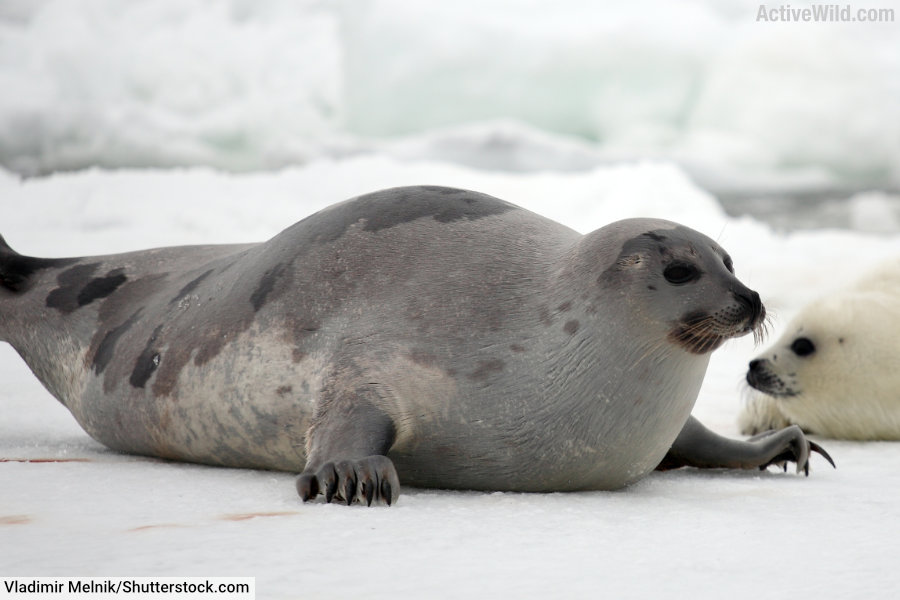
- Scientific Name: Pagophilus groenlandicus
- Where Found: North Atlantic & Arctic Oceans
- Typical Size: 1.7–2.0 m / 5.6–6.6 ft
- Typical Weight: 115–140 kg / 254–309 lb
- Distinguishing Features: Black harp-shaped back markings; white pups
- IUCN Conservation Status: Least Concern
Native to the North Atlantic and Arctic Oceans, harp seals are easily recognized by the harp-shaped markings on the backs of adults. Pups are born with iconic white fur, which they shed after a few weeks. These seals breed on pack ice and feed on fish and crustaceans. Harp seals are known for their long migrations and spend most of their time in water. Their large flippers and streamlined shape make them agile swimmers.
Hawaiian Monk Seal
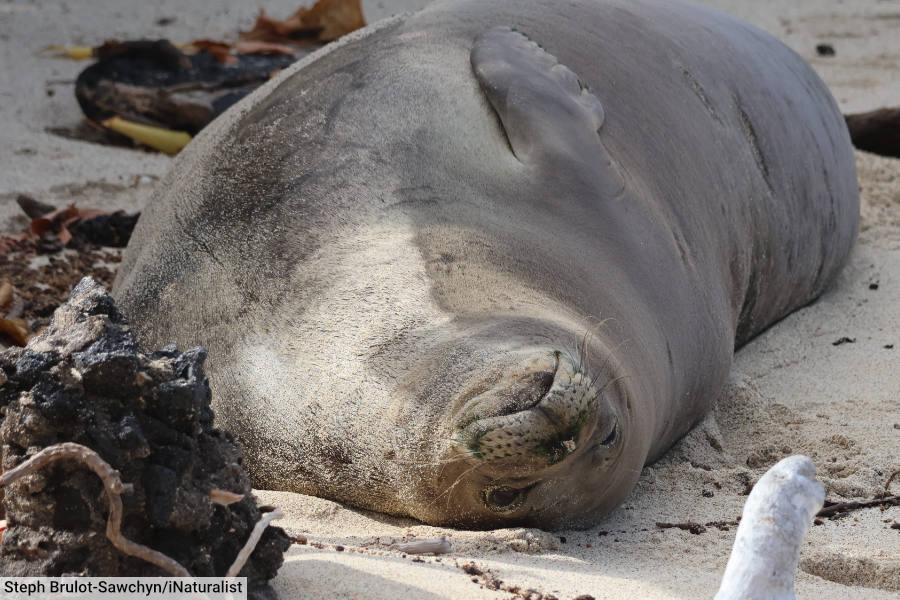
- Scientific Name: Neomonachus schauinslandi
- Where Found: Hawaiian Islands
- Typical Size: 2.1–2.25 m / 6.9–7.4 ft
- Typical Weight: 169–203 kg / 373–448 lb
- Distinguishing Features: Silvery-gray coat; no ear flaps; solitary
- IUCN Conservation Status: Endangered
One of the most endangered seals, the Hawaiian monk seal is endemic to the Hawaiian Islands. With a sleek, silvery-gray coat and slender body, they inhabit sandy beaches and coastal waters. These seals forage in coral reefs and sandy bottoms, eating fish, squid, and crustaceans. Typically solitary, they rest on beaches during the day. Their population faces threats from human disturbance, entanglement, and low juvenile survival. Conservation efforts focus on habitat protection and rehabilitation.
Hooded Seal
- Scientific Name: Cystophora cristata
- Where Found: North Atlantic
- Typical Size: 2.0–3.0 m / 6.6–9.8 ft
- Typical Weight: 150–400 kg / 330–880 lb
- Distinguishing Features: Inflatable nasal sac in males
- IUCN Conservation Status: Vulnerable
Found in the North Atlantic, hooded seals are famous for the inflatable nasal sac, or ‘hood,’ that males use in courtship displays and fights. Males are much larger than females and have a silver-gray coat with dark blotches. These deep-diving seals feed on squid and fish in cold offshore waters. They have one of the shortest nursing periods of any mammal; just four days. During those four days, the pup doubles in size.
Leopard Seal
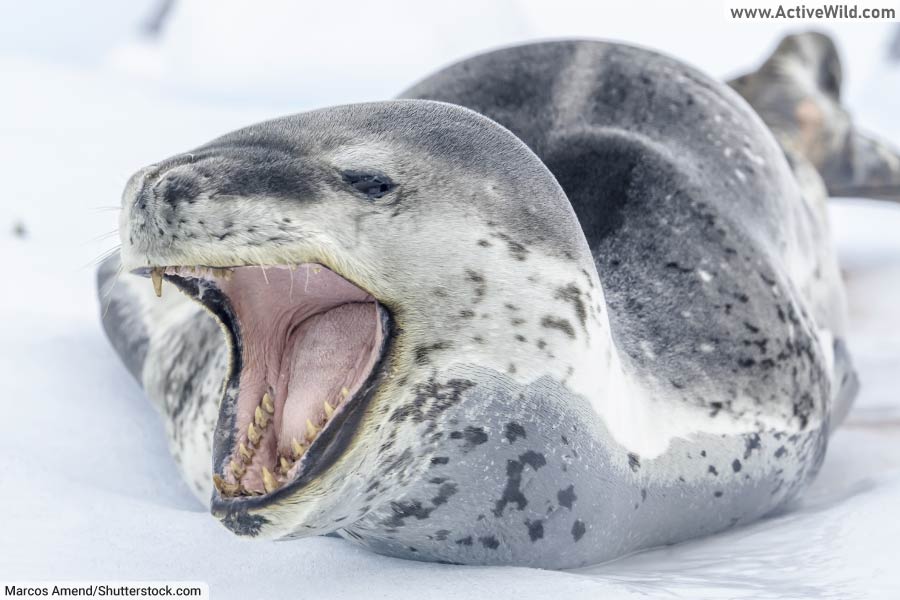
- Scientific Name: Hydrurga leptonyx
- Where Found: Antarctic pack ice
- Typical Size: 2.8–3.8 m / 9.2–12.5 ft
- Typical Weight: 300–500 kg / 660–1100 lb
- Distinguishing Features: Long, slender body; large head; spotted pattern
- IUCN Conservation Status: Least Concern
Leopard seals have a slender, reptilian head and powerful jaws. Their spotted coat gives them their name. Leopard seals are solitary and patrol the edges of ice floes. They feed on other Antarctic seals, penguins, and krill. Their vocalizations are eerie and melodic, used for communication in water.
You can find out more about this species on this page: Leopard Seal Facts
Mediterranean Monk Seal
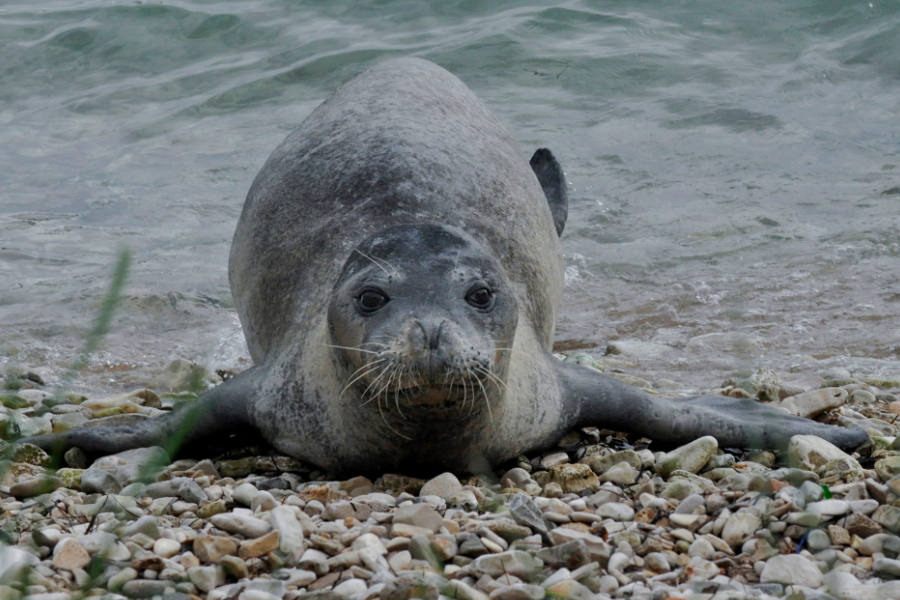
- Scientific Name: Monachus monachus
- Where Found: Mediterranean & eastern Atlantic
- Typical Size: 2.4 m / 7.9 ft
- Typical Weight: 300–315 kg / 661–694 lb
- Distinguishing Features: Smooth coat; uses sea caves for pupping
- IUCN Conservation Status: Vulnerable
With fewer than 800 individuals left, the Mediterranean monk seal is one of the world’s rarest pinnipeds. Found in the Mediterranean and parts of the Atlantic, they rest and breed in coastal caves. These seals have a robust body and dark brown coat. They feed on a variety of fish and cephalopods. Once common on beaches, they now avoid human activity. Conservation efforts have focused on protecting breeding caves and minimizing disturbance.
Northern Elephant Seal
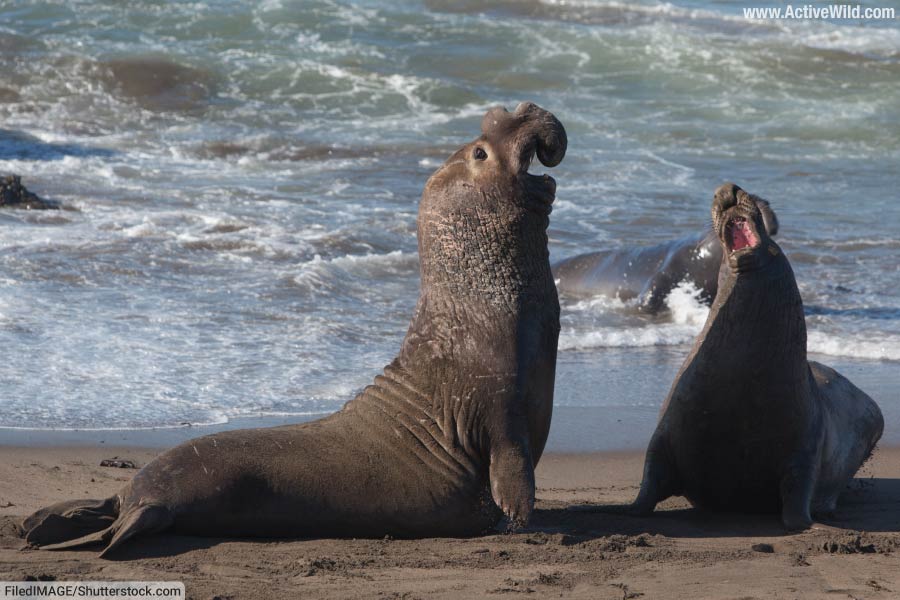
- Scientific Name: Mirounga angustirostris
- Where Found: Eastern North Pacific
- Typical Size: 3.6–4.5 m / 11.8–14.8 ft
- Typical Weight: 750–2300 kg / 1650–5070 lb
- Distinguishing Features: Large proboscis in males; very large body
- IUCN Conservation Status: Least Concern
Northern elephant seals are the second-largest pinnipeds; only the southern elephant seal is larger. Males (which are far larger than females) reach over 4 meters and sport a large proboscis, which is used to create and amplify sound.
Found along the Pacific coast of North America, northern elephant seals breed on sandy beaches and spend most of the year at sea. They are deep divers, feeding on squid and fish at great depths. Males compete aggressively for harems, while females nurse pups for about a month. The population rebounded from near extinction in the 1800s.
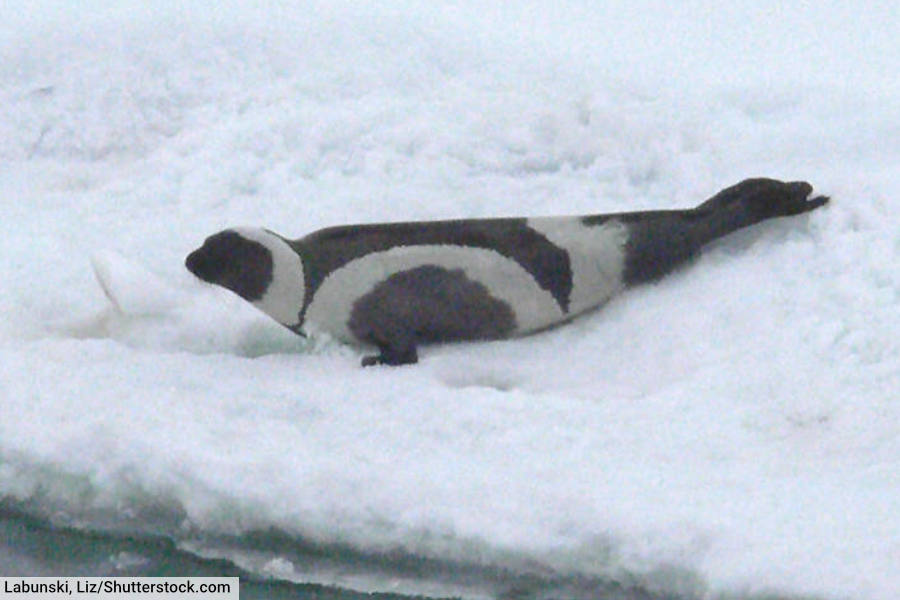
Ribbon Seal
- Scientific Name: Histriophoca fasciata
- Where Found: Bering & Okhotsk Seas
- Typical Size: 1.5–1.75 m / 4.9–5.7 ft
- Typical Weight: 55 kg / 121 lb
- Distinguishing Features: Dark body with four light-colored bands
- IUCN Conservation Status: Least Concern
Ribbon seals are strikingly patterned, with dark fur and bold white bands encircling their neck, tail, and flippers. Found in the Bering and Okhotsk Seas, they live on pack ice and are rarely seen on land. These seals feed on fish, squid, and crustaceans. Solitary by nature, they are known for their elusive behavior. Ribbon seals are well adapted to icy habitats and are excellent divers, though little is known about their social behavior.
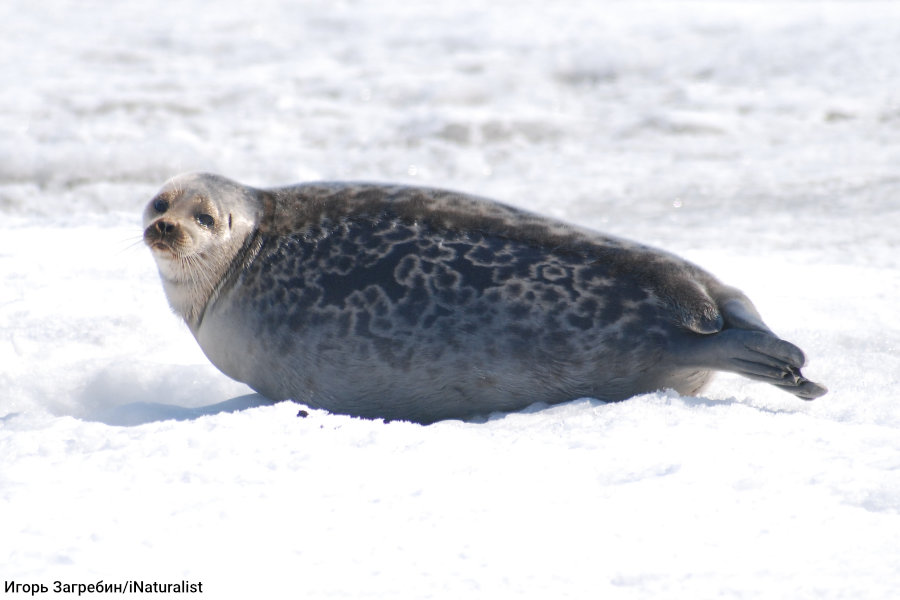
Ringed Seal
- Scientific Name: Pusa hispida
- Where Found: Arctic Ocean & surrounding seas
- Typical Size: 1.1–1.5 m / 3.6–4.9 ft
- Typical Weight: 50–70 kg / 110–154 lb
- Distinguishing Features: Spotted ringed coat; smallest Arctic seal
- IUCN Conservation Status: Least Concern
The ringed seal is the smallest Arctic seal, distinguished by dark spots encircled by light rings on its coat. They are crucial prey for polar bears and are found throughout Arctic and sub-Arctic regions. Ringed seals maintain breathing holes in ice using their strong claws. They feed on fish and invertebrates. Pups are born in snow dens on sea ice, providing protection from predators. Climate change and ice loss pose serious threats to their survival.
You can find out more about this species on this page: Ringed Seal Facts
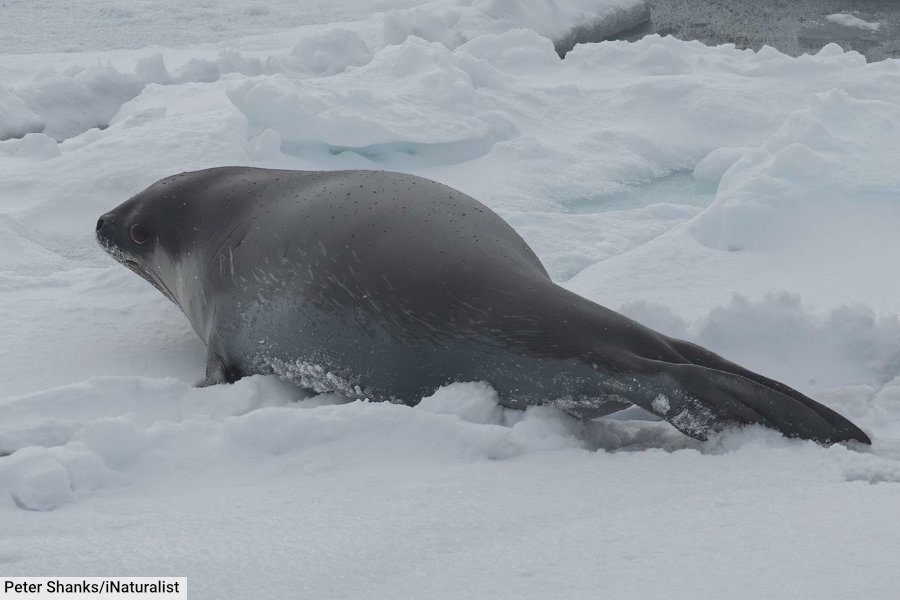
Ross Seal
- Scientific Name: Ommatophoca rossii
- Where Found: Antarctic pack ice
- Typical Size: 1.68–2.5 m / 5.5–8.2 ft
- Typical Weight: 129–216 kg / 284–476 lb
- Distinguishing Features: Large eyes; short, broad snout
- IUCN Conservation Status: Least Concern
Ross seals are the least-studied and least abundant of Antarctica’s seals, living in remote pack ice zones. They are small and stocky with short faces and large, expressive eyes. Their distinctive trilling vocalizations can be heard underwater. Ross seals feed primarily on squid and fish. Solitary and rarely seen, they spend most of their time in water and haul out only occasionally. Their remote habitat has helped shield them from significant human disturbance.
Southern Elephant Seal
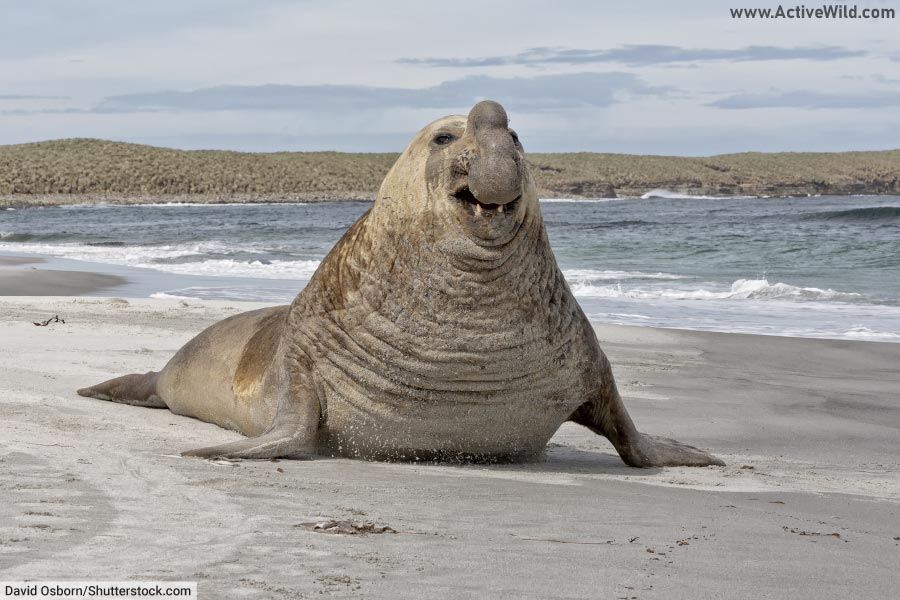
- Scientific Name: Mirounga leonina
- Where Found: Sub-Antarctic & Antarctic islands
- Typical Size: 2.6–5.8 m / 8.5–19 ft
- Typical Weight: 350–3700 kg / 770–8200 lb
- Distinguishing Features: World’s largest seal; male proboscis
- IUCN Conservation Status: Least Concern
The southern elephant seal is the largest pinniped, with males reaching up to 6 meters and weighing over 3,000 kg. Found on sub-Antarctic islands, they breed in huge colonies. Males fight violently for access to harems. These seals undertake long foraging trips in the Southern Ocean, diving deep for squid and fish. Their name comes from the male’s trunk-like nose, used in dominance displays.
You can find out more about this species on this page: Southern Elephant Seal Facts
Spotted Seal
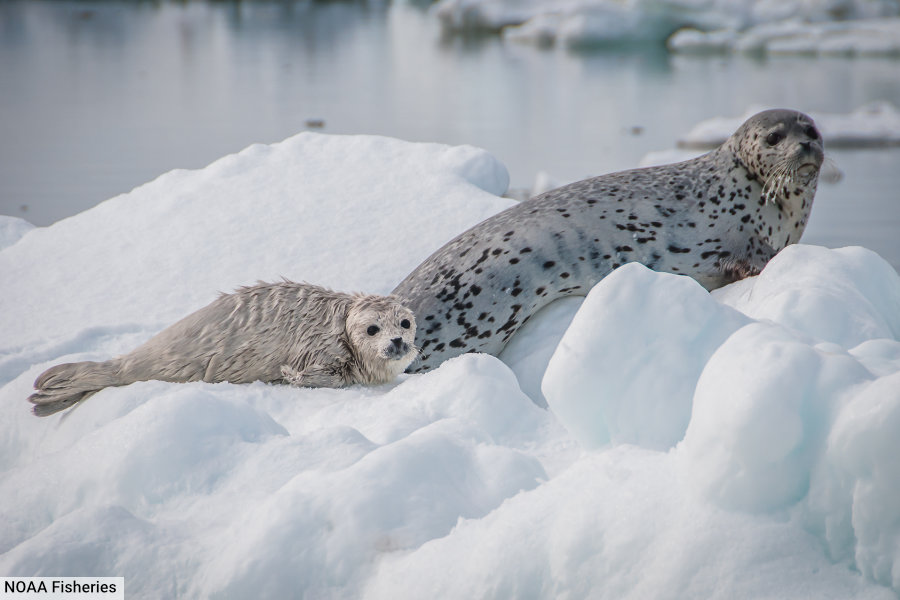
- Scientific Name: Phoca largha
- Where Found: North Pacific & Bering Sea
- Typical Size: 1.4–2.1 m / 4.6–6.9 ft
- Typical Weight: 65–150 kg / 143–331 lb
- Distinguishing Features: Light coat with dark spots; rounded head
- IUCN Conservation Status: Least Concern
Closely related to the harbor seal, the spotted seal inhabits the North Pacific and adjacent seas. Its light coat is marked with distinct dark spots. These seals prefer sea ice during the breeding season and migrate with seasonal ice flows. They feed on fish and invertebrates. Spotted seals are shy and avoid human contact. Some populations migrate over 2,100 miles.
Weddell Seal
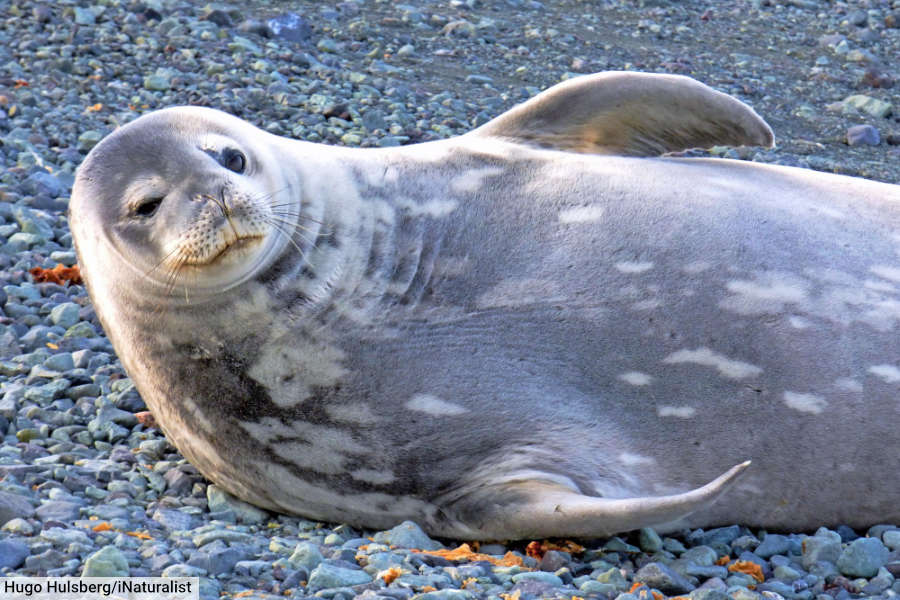
- Scientific Name: Leptonychotes weddellii
- Where Found: Circumpolar Antarctica
- Typical Size: 2.5–3.5 m / 8.2–11.5 ft
- Typical Weight: 400–600 kg / 880–1320 lb
- Distinguishing Features: Dark gray with light patches; uses teeth to maintain breathing holes
- IUCN Conservation Status: Least Concern
Weddell seals live farther south than any other mammal, thriving in Antarctic fast ice (ice that is fastened to land) zones. They are known for maintaining breathing holes in thick ice with their teeth. Weddell seals have a calm temperament and a silvery-gray coat with light blotches. They feed on fish, squid, and crustaceans. Their vocalizations are diverse and musical, used in social interactions. These seals are excellent divers and spend extended periods under ice in search of prey, their sensitive whiskers helping them to navigate and hunt in the darkness.
Discover More With Active Wild
Visit our main animals page for links to animal information and a complete guide to the animal kingdom: Animals
You can see more ocean animals on this page: Ocean Animals List with Pictures & Facts
You can find out more about seals in Antarctica on this page: Antarctic Seals List And Facts
You can find out more about seals in the Arctic on this page: Arctic Seals List And Facts
The post Types Of Seals: List Of All Seal Species With Pictures & Facts appeared first on Active Wild.