Situated on a vast volcanic hotspot in the northwestern United States, Yellowstone National Park is one of the world’s best-known national parks, famous for its iconic animal species.
On this page is a list of Yellowstone animals with pictures and interesting facts…
Yellowstone Animals List
Introduction To Yellowstone National Park
Established in 1872, Yellowstone was the world’s first national park. It spans nearly 3,500 square miles across Wyoming, Montana, and Idaho. Its landscapes range from geothermal marvels like the Old Faithful geyser and Mammoth Hot Springs to sweeping valleys and alpine forests—each of which has its own, unique, ecosystem.
Yellowstone is home to an impressive array of wildlife, from the powerful American bison—the only continuously free-ranging herd in the lower 48 states—to the elusive gray wolf, reintroduced in the 1990s after decades of absence.
Grizzly bears, elk, bald eagles, and countless other species thrive here, making Yellowstone a living testament to the importance of conservation and a window into the untamed beauty of North America’s wilderness.
Below is a list of animals found in Yellowstone National Park. It includes some of the park’s best-known species, as well as a few interesting, but lesser-known animals…
American Bison
- Scientific name: Bison bison
- Class: Mammalia
- Order: Artiodactyla
- Family: Bovidae
- Conservation Status: Near Threatened
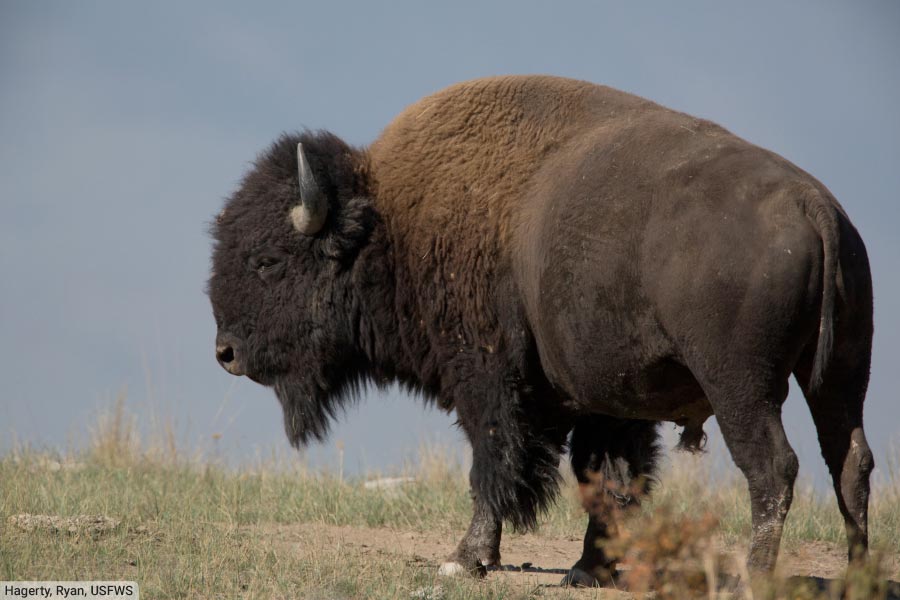
The American bison, also called buffalo, is the largest land mammal in North America, with males weighing up to 2,000 pounds. It is recognizable by its massive head, humped shoulders, and shaggy brown coat.
This iconic Yellowstone Park species is a grazing herbivore, feeding mainly on grasses. It plays a crucial ecological role, shaping plant communities and providing habitat for other wildlife.
The American bison once roamed the continent in vast herds, but as a result of overhunting, almost became extinct.
Yellowstone National Park hosts the oldest and largest public bison herd in the United States, with animals roaming freely since prehistoric times. This herd is genetically pure and managed as wildlife, not livestock.
It’s not uncommon for traffic to be brought to a halt in the park as a herd of bison crosses the road!
Discover More With Active Wild
- Discover different types of mammals on this page: Types of Mammals
- You can see other animals with horns on this page: Animals With Horns
American White Pelican
- Scientific name: Pelecanus erythrorhynchos
- Class: Aves
- Order: Pelecaniformes
- Family: Pelecanidae
- Conservation Status: Least Concern
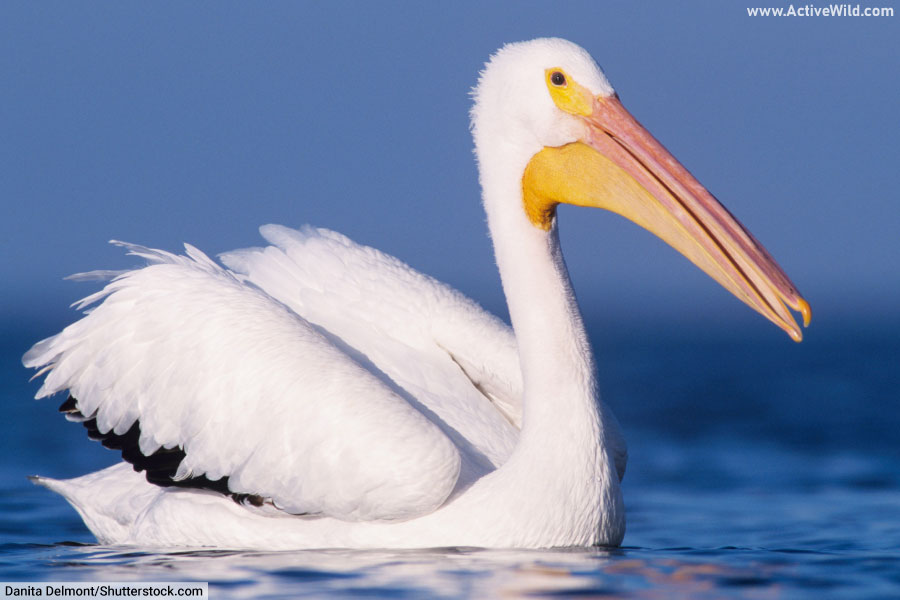
The American white pelican is one of North America’s largest birds, with a wingspan reaching up to 9 feet. (Only one other North American bird—the California Condor—has a larger wingspan.)
The pelican is easily distinguished from other Yellowstone birds by its bright white plumage, black wing tips, and long orange bill with a throat pouch for scooping fish.
The species feeds cooperatively, often working in groups to herd fish into shallow water before dipping its bill to catch prey.
These large birds breed in large colonies on remote islands in inland lakes. In Yellowstone National Park, American white pelicans are commonly seen at Yellowstone Lake, where they feed on cutthroat trout and other fish. The park’s colony on the lake’s Molly Islands is one of the few high-elevation nesting sites for this species in North America.
Discover More With Active Wild
- You can find out more about birds on this page: Birds – The Ultimate Guide
- Discover different types of birds on this page: Types of Birds
Bald Eagle
- Scientific name: Haliaeetus leucocephalus
- Class: Aves
- Order: Accipitriformes
- Family: Accipitridae
- Conservation Status: Least Concern
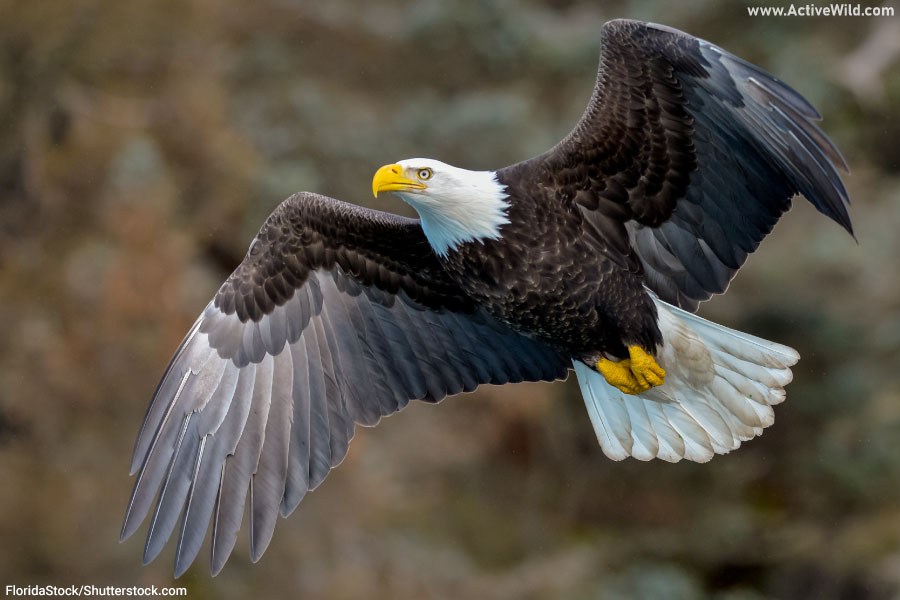
The bald eagle is a large bird of prey native to North America, recognized by its white head and tail contrasting with a dark brown body and wings, plus a yellow beak and talons.
With a wingspan of up to 7.5 feet, the eagle is a powerful flier and skilled hunter, feeding mainly on fish but also on waterfowl, small mammals, and carrion. They nest in tall trees or snags, often reusing the same large stick nest for many years.
Once endangered due to hunting, habitat loss, and DDT pesticide use, it has rebounded through legal protection and conservation efforts.
In Yellowstone National Park, bald eagles are found near rivers and lakes, especially the Yellowstone River and Yellowstone Lake, where fish are abundant.
Discover More With Active Wild
- You can find out more about this species on this page: Bald Eagle Facts
- Discover different types of birds on this page: Types of Birds
Bighorn Sheep
- Scientific name: Ovis canadensis
- Class: Mammalia
- Order: Artiodactyla
- Family: Bovidae
- Conservation Status: Least Concern
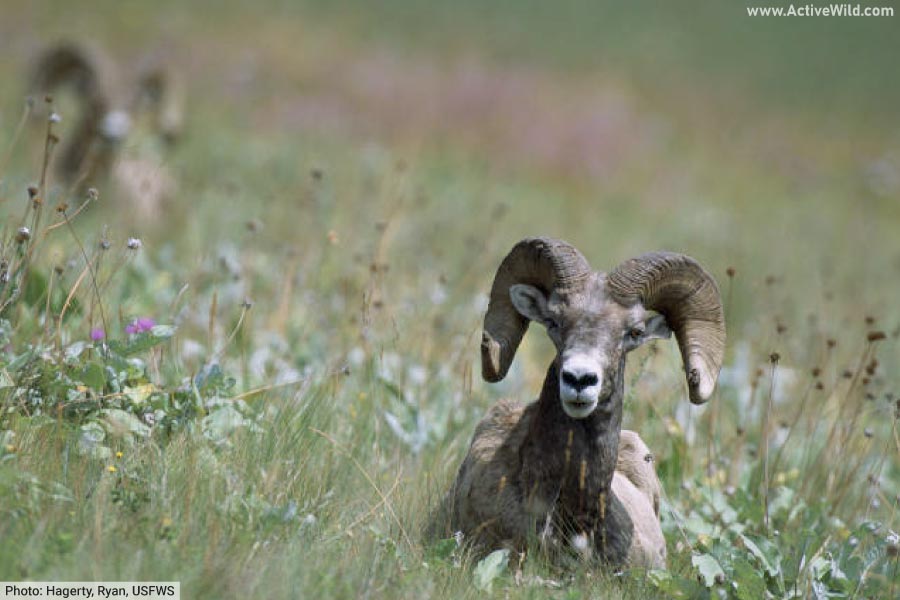
The bighorn sheep is a robust wild sheep native to North America, named for the males’ massive, curled horns, which can weigh up to 30 pounds. Ewes have shorter, more slender horns.
Adapted to rugged mountain terrain, bighorn sheep are sure-footed climbers, using steep cliffs for escape from predators. They graze mainly on grasses, shrubs, and herbs, with diet varying by season.
Males engage in dramatic head-butting contests during the fall rut, sometimes colliding at speeds over 20 mph.
In Yellowstone National Park, bighorn sheep are most often seen in the rocky cliffs near the Gardiner River and Mount Everts.
Discover More With Active Wild
- You can find out more about mammals on this page: Mammals – The Ultimate Guide
- Discover different types of mammals on this page: Types of Mammals
American Black Bear
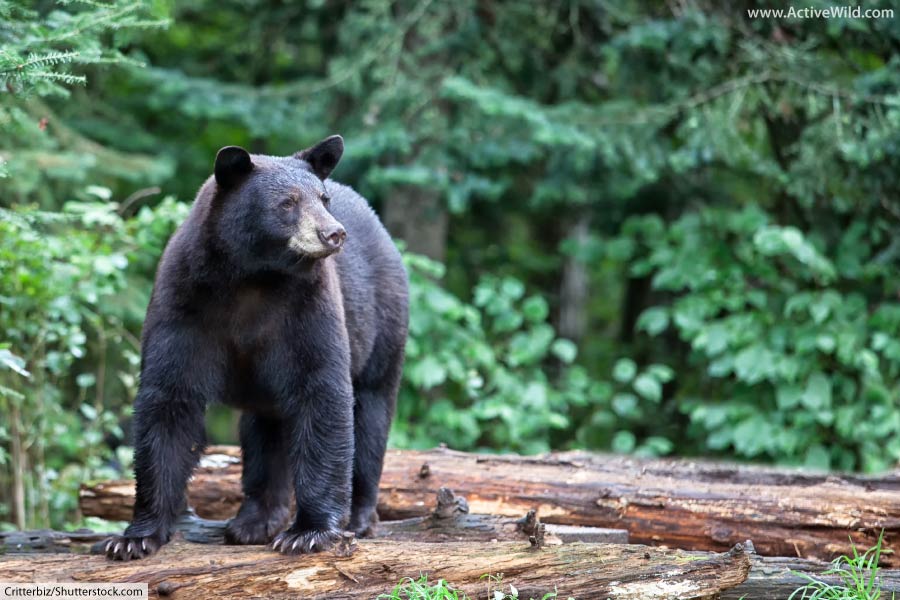
- Scientific name: Ursus americanus
- Class: Mammalia
- Order: Carnivora
- Family: Ursidae
- Conservation Status: Least Concern
The American black bear is the most widespread bear species in North America, where it is typically found in woodland or forest habitats. It is one of two bear species found in Yellowstone National Park, the other being the grizzly bear (a subspecies of brown bear), listed further down the page.
Adult American black bears typically weigh between 100 and 600 pounds, with males larger than females. Omnivorous and opportunistic, black bears eat plants, berries, nuts, insects, fish, and carrion. They are excellent climbers and can run up to 30 mph.
In Yellowstone National Park, black bears are commonly seen in forested areas and along roadsides in spring, feeding on emerging vegetation. Black bears in Yellowstone usually hibernate in dens from late fall to early spring.
Discover More With Active Wild
- You can find out more about this species on this page: American Black Bear Facts
- Discover all eight bears on this page: Types of Bears with Pictures & Facts
Barred (Western) Tiger Salamander
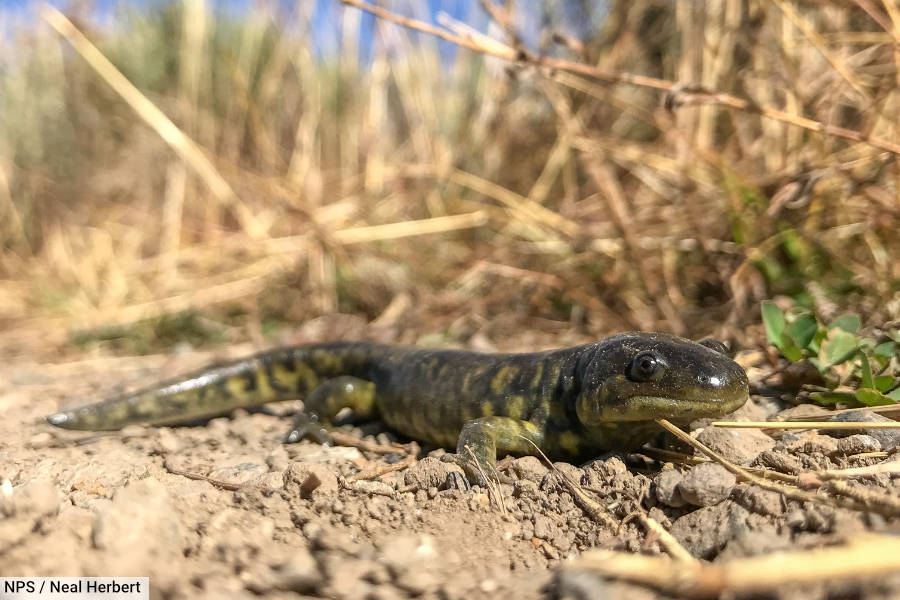
- Scientific name: Ambystoma mavortium
- Class: Amphibia
- Order: Urodela (Caudata)
- Family: Ambystomatidae
- Conservation Status: Least Concern
The barred tiger salamander, also known as the western tiger salamander, is one of the largest terrestrial salamanders in North America, typically measuring 17–33 cm (6.7–13 in) in length and weighing 126–227 g (4.4–8 oz). It has a sturdy body with dark brown to black skin marked by yellow or olive blotches or bars.
One of just five amphibian species found in Yellowstone, this nocturnal animal spends most of its life underground in burrows, emerging mainly on rainy nights. It feeds on insects, worms, small amphibians, and even young mice.
Breeding occurs in ponds and slow-moving waters, where it lays gelatinous egg masses.
In Yellowstone National Park, western tiger salamanders inhabit wetlands, ponds, and lakes at lower to mid-elevations, particularly in the northern range and Hayden Valley. They play an important ecological role by controlling insect populations and serving as prey for birds and mammals.
Discover More With Active Wild
- Discover more North American amphibians on this page: North American Amphibians
- You can discover more amphibians on this page: Amphibians Examples
Boreal Chorus Frog
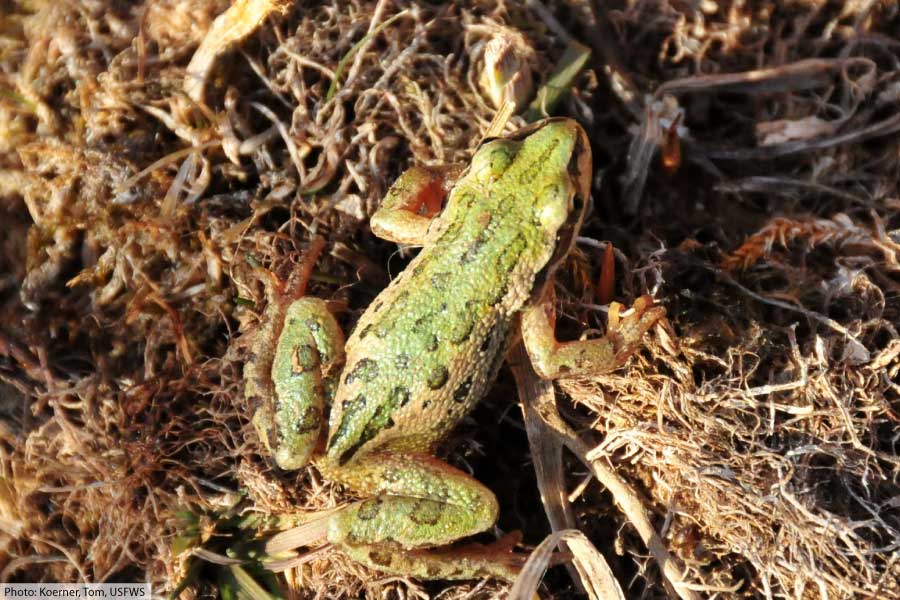
- Scientific name: Pseudacris maculata
- Class: Amphibia
- Order: Anura
- Family: Hylidae
- Conservation Status: Least Concern
The boreal chorus frog is one of only five amphibian species found in Yellowstone National Park. It is a small amphibian, typically measuring 2–4 cm (0.75–1.5 in) in length. Its smooth skin can range in color from green to brown or gray, often marked with three dark stripes down its back. Known for its loud, rising “cree-ee-ee-eeek” call, it is one of the earliest frogs to breed in spring, sometimes calling when ice still covers parts of ponds.
Boreal chorus frogs live in wetlands, marshes, and moist meadows, feeding on small insects and other invertebrates. In Yellowstone National Park, they inhabit low- to mid-elevation wetland areas. Their early breeding habits and adaptability allow them to thrive in Yellowstone’s short, cool summers, making them an important part of the park’s amphibian community.
Discover More With Active Wild
- Discover more North American amphibians on this page: North American Amphibians
- You can discover more amphibians on this page: Amphibians Examples
Coyote
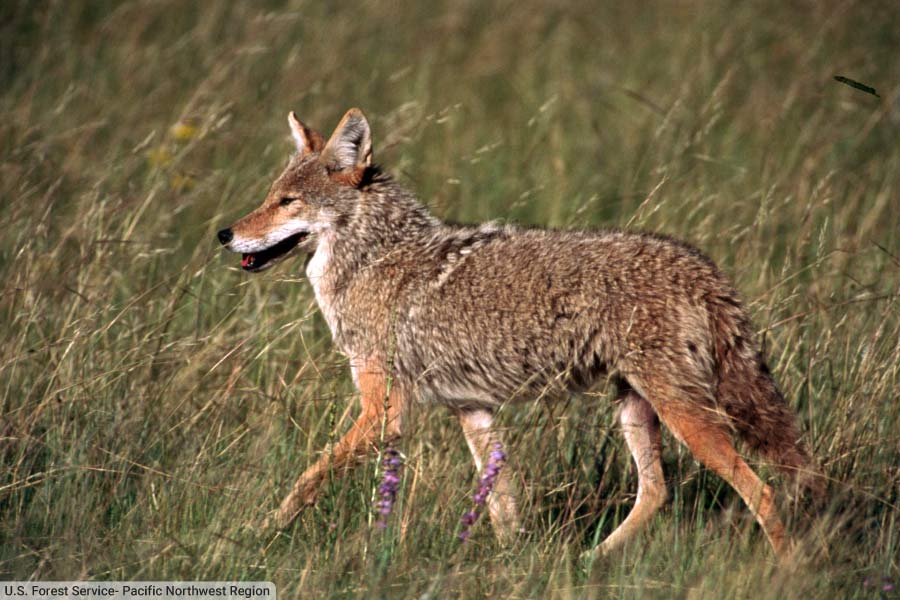
- Scientific name: Canis latrans
- Class: Mammalia
- Order: Carnivora
- Family: Canidae
- Conservation Status: Least Concern
The coyote is a highly adaptable member of the dog family found across North America, from deserts to forests and even urban areas. Adults typically weigh 9–23 kg (20–50 lb) and measure 1–1.3 m (3.3–4.3 ft) from nose to tail.
Coyotes have a slender build, pointed ears, and a bushy tail, with fur that ranges from grayish-brown to reddish-tan. Omnivorous and opportunistic, they eat small mammals, birds, carrion, fruit, and insects.
Known for their intelligence and complex vocalizations, coyotes often hunt alone or in pairs but may form small packs.
In Yellowstone National Park, they are frequently seen in open valleys like Lamar and Hayden, where they prey on rodents and scavenge from wolf kills, playing an important role in the park’s predator-prey dynamics.
Unfortunately, these intelligent animals can lose their wariness around humans in the park, leading to begging behavior aggression.
Discover More With Active Wild
- You can find out more about this species on this page: Coyote Facts
- You can see EVERY species of dog on this page: Wild Dog Species List with Pictures and Facts
Elk
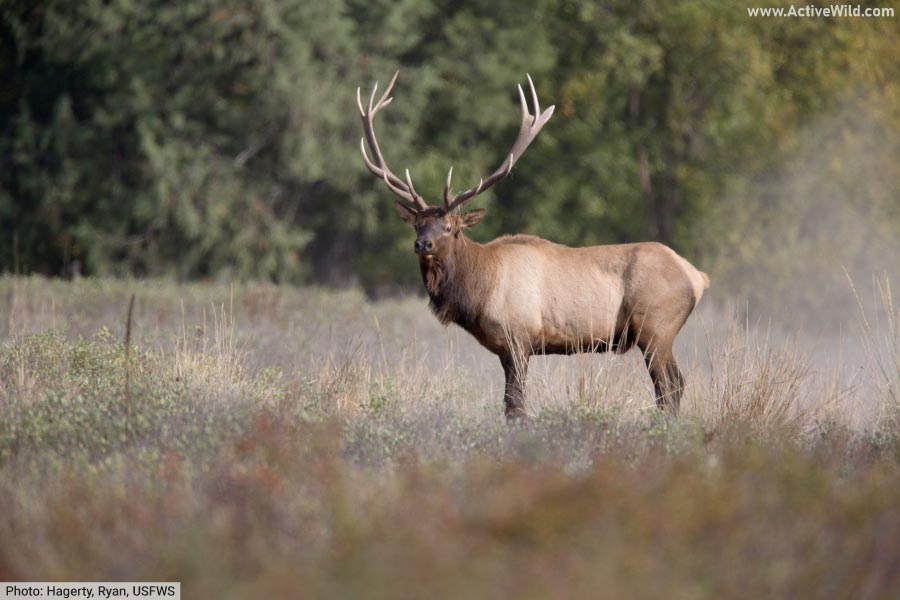
- Scientific name: Cervus canadensis / Cervus elaphus
- Class: Mammalia
- Order: Artiodactyla
- Family: Cervidae
- Conservation Status: Least Concern
The elk is one of the largest members of the deer family, with males (bulls) weighing 320–500 kg (700–1,100 lb) and standing about 1.5 m (5 ft) tall at the shoulder. Females (cows) are smaller, weighing 225–320 kg (500–700 lb).
Elk have a reddish-brown coat in summer that turns grayish-brown in winter, with a distinctive pale rump. Bulls grow large, branching antlers that can span over 1.2 m (4 ft) and are shed each winter. They are herbivores, grazing on grasses, shrubs, and tree bark.
In Yellowstone National Park, elk are one of the most abundant large mammals and a key food source for predators like wolves and bears. They are often seen in valleys, meadows, and along river corridors year-round.
Discover More With Active Wild
- You can find out more about this species on this page: Elk Facts
- You can see more animals with antlers on this page: Animals With Antlers
Gray Wolf
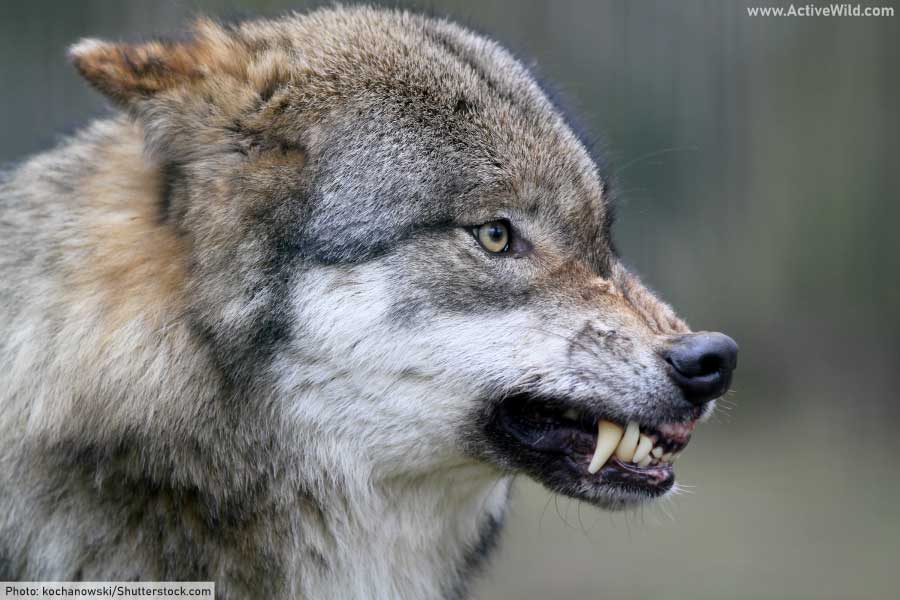
- Scientific name: Canis lupus
- Class: Mammalia
- Order: Carnivora
- Family: Canidae
- Conservation Status: Least Concern
The gray wolf is a large canid (member of the dog family) that typically weighs 30–50 kg (66–110 lb) and measures 1.3–1.6 m (4.3–5.2 ft) from nose to tail, with a shoulder height of 60–90 cm (24–35 in). It has a thick, insulating coat that varies in color from gray to black or white.
Wolves live and hunt in family-based packs, using teamwork to pursue prey such as elk, deer, and bison. They communicate through vocalizations (including their famous howl), scent marking, and body language.
In Yellowstone National Park, gray wolves were reintroduced in 1995 after a decades-long absence, restoring a crucial predator to the ecosystem. As a keystone species, their presence has had wide-reaching ecological effects, influencing prey populations and even vegetation patterns via a process known as a trophic cascade.
Discover More With Active Wild
- You can find out more about this species on this page: Wolf Facts
- You can see EVERY species of dog on this page: Wild Dog Species List with Pictures and Facts
Grizzly Bear
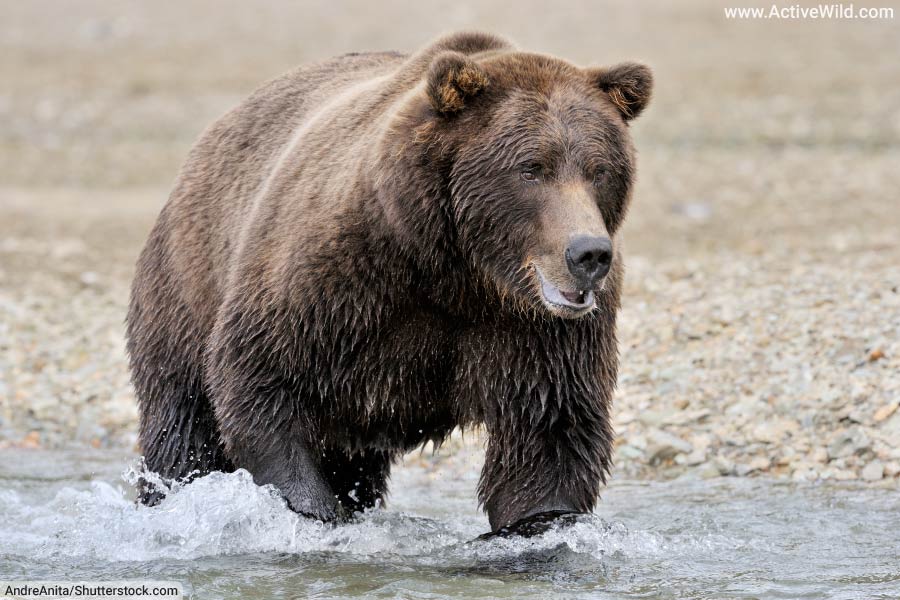
- Scientific name: Ursus arctos horribilis
- Class: Mammalia
- Order: Carnivora
- Family: Ursidae
- Conservation status: Least Concern
The grizzly bear is a powerful subspecies of the brown bear, typically weighing 180–360 kg (400–800 lb) for males and 130–200 kg (290–440 lb) for females, with a length of 2–2.5 m (6.5–8 ft) and a shoulder height of about 1 m (3.3 ft). It is recognizable by its muscular shoulder hump, concave facial profile, and long claws suited for digging. Fur color ranges from light brown to nearly black, often with grizzled tips.
Omnivorous, grizzlies eat plants, berries, roots, insects, fish, and large mammals. In Yellowstone National Park, they roam forests, meadows, and river valleys, especially in spring when feeding on winter-killed animals. Grizzlies are a key apex predator in the park, influencing prey populations and helping maintain ecological balance.
Discover More With Active Wild
- You can find out more about this species on this page: Grizzly Bear Facts
- You can find out more about bears on this page: Bears – The Ultimate Guide
- Discover all eight bears on this page: Types of Bears with Pictures & Facts
Moose
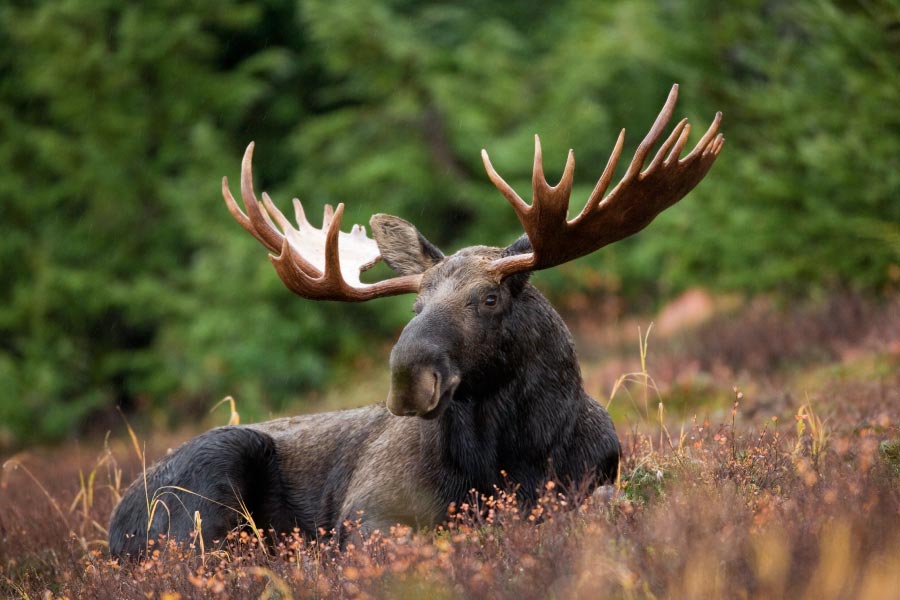
- Scientific name: Alces alces
- Class: Mammalia
- Order: Artiodactyla
- Family: Cervidae
- Conservation Status: Least Concern
The moose is the largest member of the deer family, with males (bulls) weighing 380–700 kg (840–1,540 lb) and standing 1.5–2.1 m (5–7 ft) tall at the shoulder. Females (cows) are smaller, at 270–360 kg (600–800 lb).
These unmistakeable large mammals have long legs, a humped shoulder, a large, overhanging nose, and in males, broad, palmate antlers that can span up to 1.8 m (6 ft). Their dark brown coat provides insulation in cold climates. Moose are browsers, feeding on willows, aspens, aquatic plants, and shrubs.
In Yellowstone National Park, moose are most often found in marshy areas, willow flats, and along rivers, particularly in the park’s southern reaches. Their presence is closely tied to wetland habitats, which provide both food and cover.
Discover More With Active Wild
- You can find out more about this species on this page: Moose Facts
- You can see more animals with antlers on this page: Animals With Antlers
Mountain Lion (also known as Cougar or Puma)
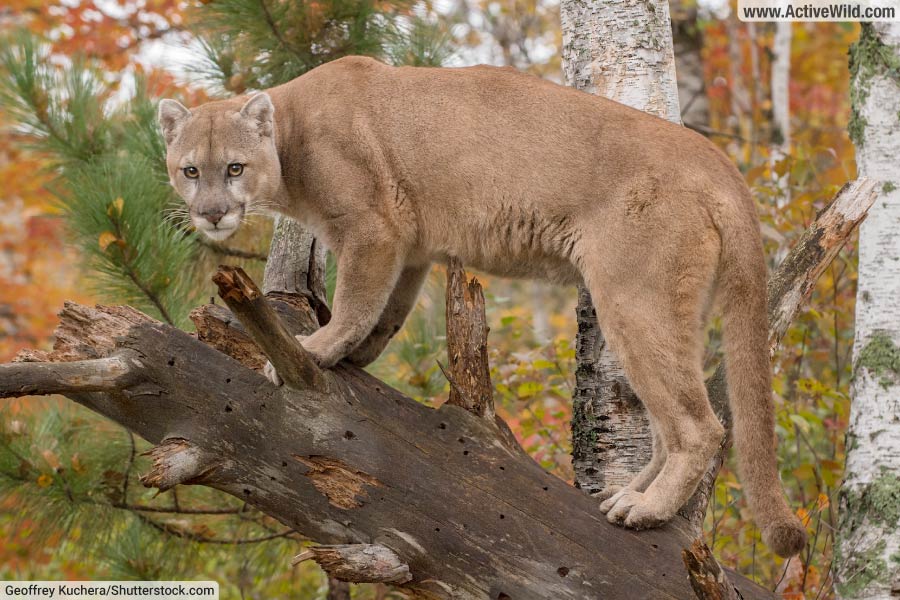
- Scientific name: Puma concolor
- Class: Mammalia
- Order: Carnivora
- Family: Felidae
- Conservation Status: Least Concern
The mountain lion, also known as cougar or puma, is a large, solitary cat weighing 29–90 kg (64–198 lb) and measuring 2–2.7 m (6.6–8.9 ft) from nose to tail, with a shoulder height of 60–90 cm (24–35 in). It has a sleek, tawny coat, a long tail tipped with black, and powerful limbs for sprinting and leaping.
Mountain lions are carnivores, primarily hunting deer but also preying on elk, bighorn sheep, and smaller animals. They are elusive and mostly active at dawn, dusk, or night.
In Yellowstone National Park, mountain lions inhabit forested and rocky terrain, using stealth to ambush prey. Although rarely seen by visitors, they play a vital role as apex predators, helping regulate ungulate populations and maintain ecosystem balance.
Other cat species found in Yellowstone park include the bobcat and the Canada lynx.
Discover More With Active Wild
- You can find out more about this species on this page: Mountain Lion Facts
- You can see EVERY species of cat on this page: Wild Cats Species List with Pictures and Facts
Mule Deer
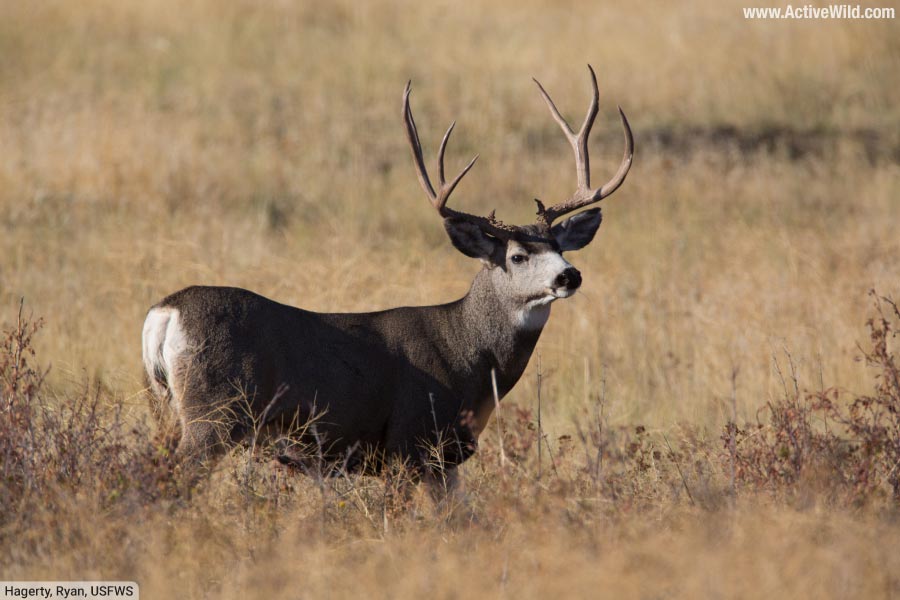
- Scientific name: Odocoileus hemionus
- Class: Mammalia
- Order: Artiodactyla
- Family: Cervidae
- Conservation Status: Least Concern
The mule deer is a medium-to-large deer species, with males (bucks) weighing 55–150 kg (120–330 lb) and females (does) 43–80 kg (95–180 lb). They stand about 1–1.1 m (3.3–3.6 ft) tall at the shoulder and measure 1.2–2.1 m (4–7 ft) in length.
Mule deer are named for their large, mule-like ears and have a stocky build, a black-tipped tail, and a reddish-brown summer coat that turns grayish-brown in winter. Males grow forked antlers that branch into two main tines. They feed on shrubs, leaves, and grasses.
In Yellowstone, mule deer are found in open forests, grasslands, and river valleys, often migrating between higher summer ranges and lower wintering grounds. They are prey for wolves, mountain lions, and coyotes.
Discover More With Active Wild
- You can see more animals with antlers on this page: Animals With Antlers
- You can see more herbivorous animals on this page: Herbivores Examples
Prairie Rattlesnake
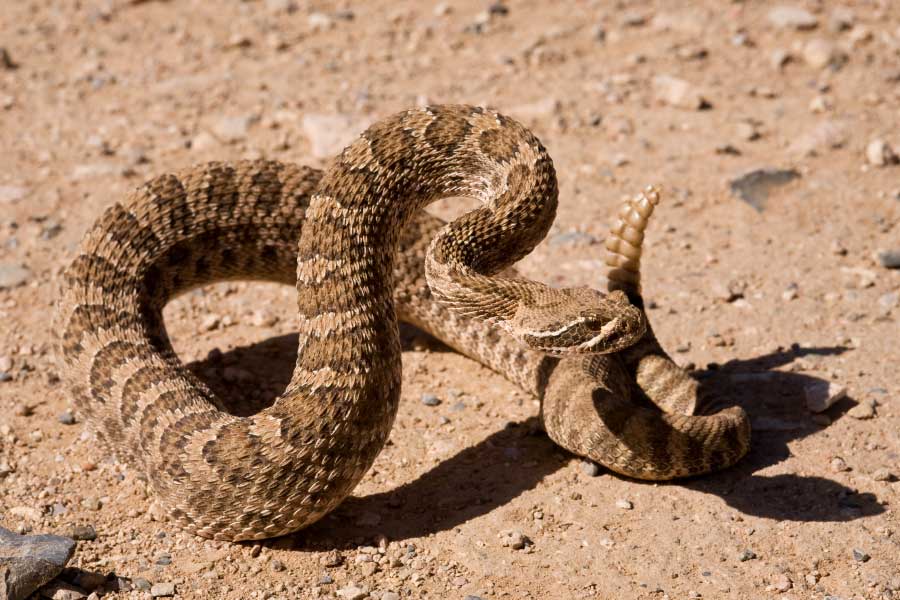
- Scientific name: Crotalus viridis
- Class: Reptilia
- Order: Squamata
- Family: Viperidae
- Conservation Status: Least Concern
Only six species of reptile are found in Yellowstone, of which the largest is the prairie rattlesnake.
This venomous pit viper typically measures 90–120 cm (3–4 ft) in length, though some can grow up to 150 cm (5 ft). It has a thick, tan to greenish-brown body with dark blotches along its back and a distinctive rattle at the end of its tail, used as a warning signal.
Heat-sensing pits between the eyes and nostrils help it detect warm-blooded prey such as rodents, birds, and small mammals. The prairie rattlesnake uses potent venom to immobilize prey and for self-defense.
In Yellowstone National Park, the snake is primarily found in the park’s lower, drier northern areas, especially near rocky outcrops and grasslands. It is the only venomous snake species in the park and plays an important role in controlling rodent populations.
Discover More With Active Wild
- You can find out more about snakes on this page: Snake Facts
- Discover different types of snakes on this page: Types of Snakes
Pronghorn
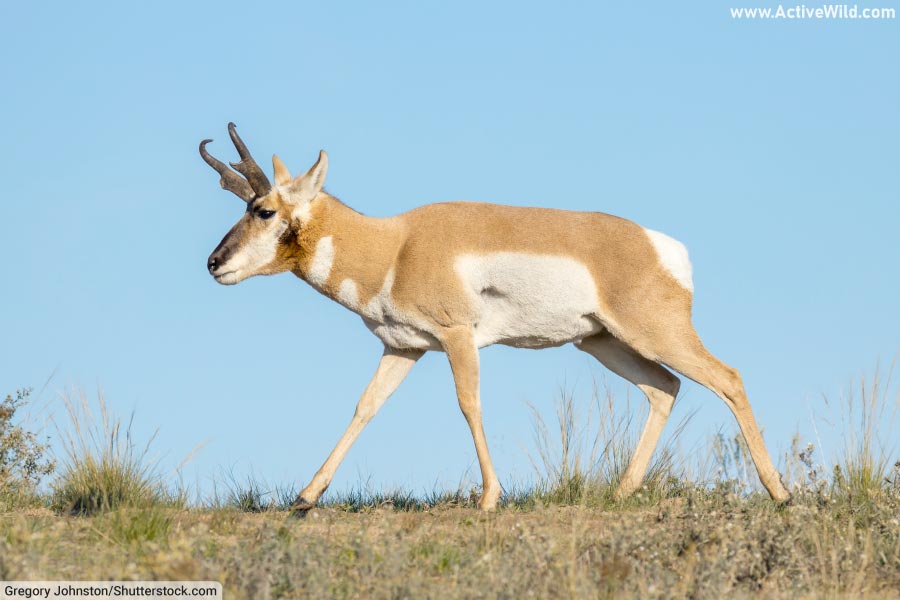
- Scientific name: Antilocapra americana
- Class: Mammalia
- Order: Artiodactyla
- Family: Antilocapridae
- Conservation Status: Least Concern
The pronghorn, often called pronghorn antelope though it is not a true antelope, is a swift, hoofed mammal weighing 40–65 kg (88–143 lb) and standing 90 cm (3 ft) tall at the shoulder. It measures 1.3–1.5 m (4.3–5 ft) in length.
Pronghorns have a tan body with white underparts, a white rump patch, and distinct black markings on the face. Both males and females grow keratin-sheathed horns, with males’ reaching 25–43 cm (10–17 in) and shedding annually.
Renowned for their speed, pronghorns can run up to 88 km/h (55 mph), making them the fastest land mammals in North America.
In Yellowstone National Park, pronghorns inhabit open grasslands and sagebrush flats, particularly in the northern range, where they graze on forbs, shrubs, and grasses.
Discover More With Active Wild
- You can find out more about this species on this page: Pronghorn Facts
- You can see more animals with antlers on this page: Animals With Antlers
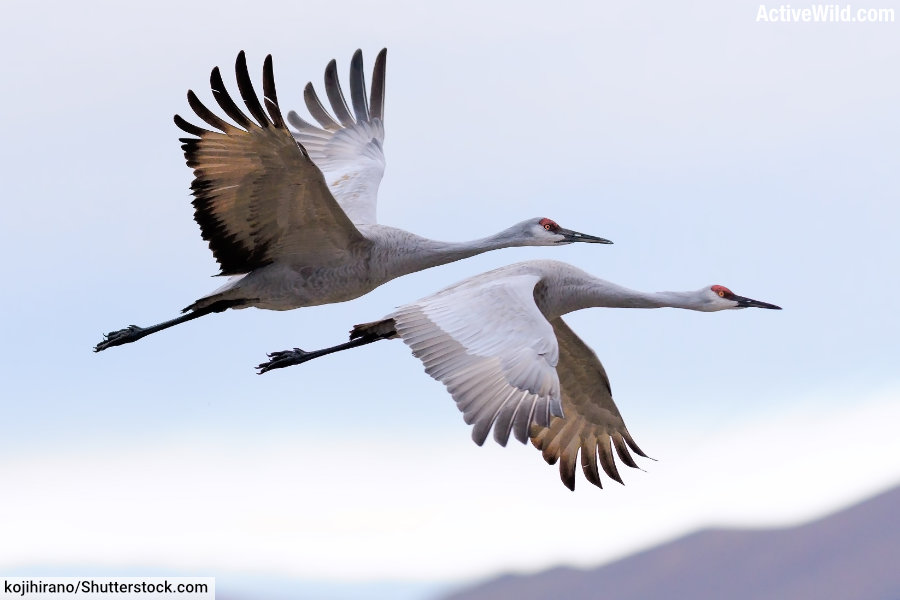
Sandhill Crane
- Scientific name: Antigone canadensis
- Class: Aves
- Order: Gruiformes
- Family: Gruidae
- Conservation Status: Least Concern
Both of North America’s crane species—the sandhill crane and whooping crane—are found in Yellowstone.
The sandhill crane is a tall, long-legged bird standing 90–120 cm (3–4 ft) high, with a wingspan of 1.6–2.3 m (5.2–7.5 ft) and weighing 3–6.3 kg (6.6–14 lb). It has gray plumage that may appear reddish-brown from preening with iron-rich mud, a long neck, and a distinctive red crown.
Known for their loud, trumpeting calls and elaborate courtship dances, sandhill cranes are omnivores, feeding on seeds, grains, insects, small vertebrates, and aquatic plants. They nest in open wetlands, building mounded platforms from vegetation.
In Yellowstone National Park, sandhill cranes return each spring to breed in marshes and wet meadows, especially in the park’s northern range. Their resonant calls can be heard over great distances, marking one of Yellowstone’s most iconic bird sounds.
Discover More With Active Wild
- You can find out more about birds on this page: Birds – The Ultimate Guide
- Discover different types of birds on this page: Types of Birds
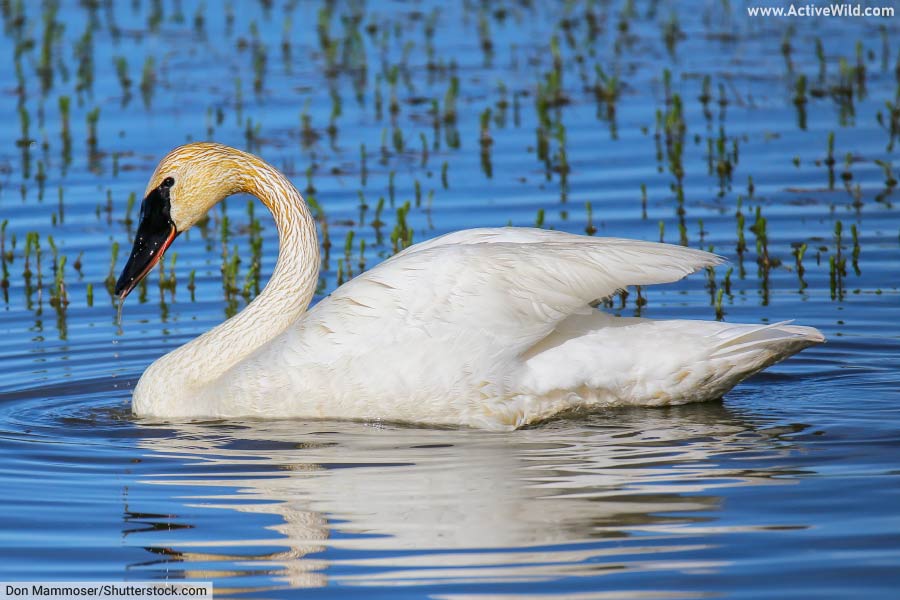
Trumpeter Swan
- Scientific name: Cygnus buccinator
- Class: Aves
- Order: Anseriformes
- Family: Anatidae
- Conservation Status: Least Concern
The trumpeter swan is the largest native waterfowl in North America, standing about 1.2–1.5 m (4–5 ft) tall, with a wingspan of 2–3 m (6.5–10 ft) and weighing 7–13.6 kg (15–30 lb). It has pure white plumage, a long neck, and a black bill that often shows a salmon-colored stripe along the mouthline.
Known for its deep, trumpet-like call, the species was once near extinction due to overhunting and habitat loss but has rebounded through conservation efforts.
Trumpeter swans feed mainly on aquatic vegetation, using their long necks to reach plants beneath the water’s surface.
In Yellowstone National Park, these swans are found on lakes, ponds, and slow-moving rivers, with a notable presence on Yellowstone Lake, where some pairs remain year-round despite harsh winter conditions.
Discover More With Active Wild
- You can find out more about birds on this page: Birds – The Ultimate Guide
- Discover different types of birds on this page: Types of Birds
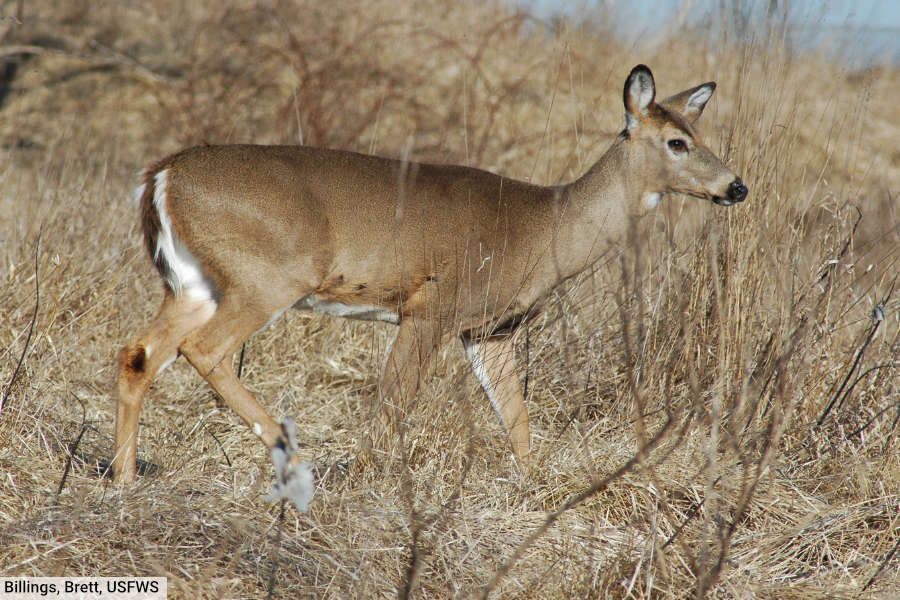
White‑Tailed Deer
- Scientific name: Odocoileus virginianus
- Class: Mammalia
- Order: Artiodactyla
- Family: Cervidae
- Conservation Status: Least Concern
The white-tailed deer is a medium-sized deer species, with males (bucks) weighing 57–136 kg (125–300 lb) and females (does) 41–94 kg (90–210 lb). They stand about 90–100 cm (3–3.3 ft) tall at the shoulder and measure 1.6–2 m (5.2–6.6 ft) in length.
Their reddish-brown summer coat turns grayish-brown in winter, and they are easily recognized by the white underside of their tail, which they raise as a warning signal when alarmed. Males grow antlers that are shed and regrown each year.
White-tailed deer are herbivores, feeding on leaves, twigs, fruits, and grasses.
Despite being North America’s most common deer species, white-tailed deer are less common than mule deer in Yellowstone National Park. They primarily inhabit river bottoms and lower-elevation areas in the park’s northern range.
Discover More With Active Wild
- You can see more animals with antlers on this page: Animals With Antlers
- Discover different types of mammals on this page: Types of Mammals
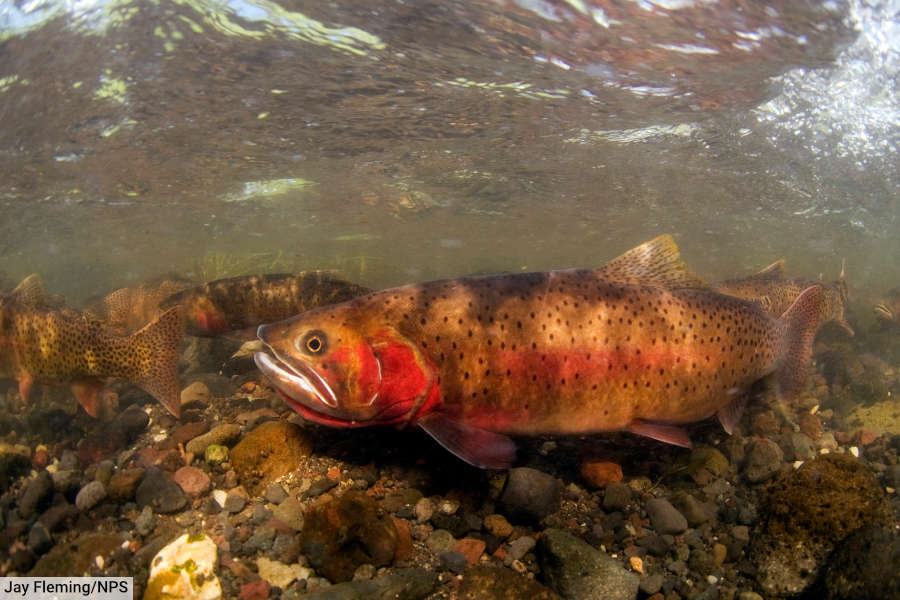
Yellowstone Cutthroat Trout
- Scientific name: Oncorhynchus clarkii bouvieri
- Class: Actinopterygii
- Order: Salmoniformes
- Family: Salmonidae
- Conservation Status: Least Concern
The Yellowstone cutthroat trout is a subspecies of Rocky Mountain cutthroat trout. It is a freshwater fish typically measuring 30–60 cm (12–24 in) in length and weighing 0.5–2.3 kg (1–5 lb), though larger individuals can occur. It has a golden-brown body with black spots concentrated toward the tail and distinctive red-orange slashes beneath the jaw.
The trout is native to the Yellowstone River drainage and plays a key role in the park’s aquatic and terrestrial ecosystems, providing food for bears, otters, ospreys, and other wildlife. Spawning occurs in shallow, gravel-bottomed streams in spring and early summer.
Yellowstone Lake supports one of the largest inland cutthroat trout populations.
Discover More With Active Wild
- You can find out more about fish on this page: Fish – The Ultimate Guide
- Discover different types of fish on this page: Types of Fish
Further Reading
- You can see a list of all national parks in the USA on this page: National Parks List
- You can see more North American animals on this page: North American Animals
- Discover more about animals: Animals – The Complete Guide
The post Yellowstone Animals: List Of Famous & Iconic Species With Pictures appeared first on Active Wild.